
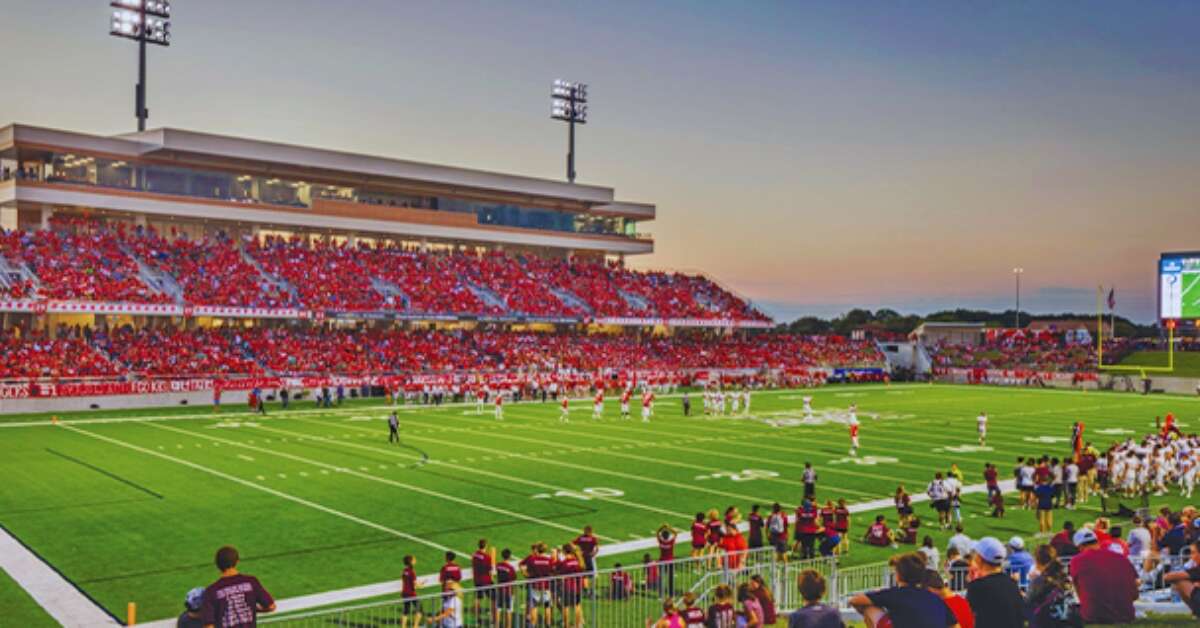
Precast Stadium Construction for High Schools
Optimizing seat capacity from 3,000 to 8,000 for modern athletic facilities that serve students and communities for decades
Elevating High School Athletics
High school athletics are more than just games; they are vibrant hubs of community, fostering school spirit, student development, and local engagement. As participation in high school sports continues to surge—reaching a record high of 8,260,891 students in the 2024-2025 school year according to the NFHS High School Athletics Participation Survey—the demand for modern, capable athletic facilities intensifies.
For many school districts, this means evaluating and upgrading existing stadiums or building new ones. Achieving the right balance of seat capacity while optimizing functionality, durability, and budget is a complex challenge. Precast concrete construction has emerged as a superior solution.
The modular stadium construction market is projected to expand at a compound annual growth rate of 9.5% through 2033, reaching a value of USD 14.5 billion—signifying a clear industry trend towards prefabricated building solutions.
The Growing Need for Modern Facilities

Many existing stadiums, often built decades ago, struggle to accommodate current attendance numbers, lack modern amenities, and may even present safety concerns. The need for venues that can support diverse sports, host playoff games, and serve as community gathering spaces is paramount.
With an estimated almost $6 billion worth of sports venue projects completed in 2024, the investment in sports infrastructure is substantial—underscoring the importance of choosing the right construction method.
The Distinct Advantages of Precast
Components manufactured off-site while site prep occurs simultaneously. Stadiums ready for the next athletic season faster, minimizing disruption.
Reduced on-site labor, minimized weather delays, and less waste contribute to significant savings and greater budget predictability.
Dense, durable product resistant to weathering, freeze-thaw cycles, and impact. Significantly lower maintenance costs over the stadium's lifespan.
Custom shapes, textures, and finishes. Incorporate school colors, logos, and specific architectural styles into precast elements.
Superior resistance to seismic activity and extreme weather. Vomitory walls and stair systems designed for safe crowd management.
The new stadium becomes a proud symbol of school spirit and community identity, enhancing appeal and functionality.
With sports and recreational injuries increasing by 17% in 2024, precast concrete structures provide robust, reliable strength—creating a secure environment for students, athletes, and spectators.
Optimizing Seat Capacity
The ideal stadium size depends on your school's needs, community size, and future growth plans. Here's what to expect at different capacity levels:
Essential Precast Components
A high school stadium built with precast concrete incorporates several key structural elements working together to create a durable, efficient, and aesthetically pleasing venue.
Raker Beams: The Structural Backbone
Precast raker beams are the angled support members that define the slope of the seating bowl. Their precision-engineered design ensures correct sightlines for spectators, allowing everyone a clear view of the action. These beams are designed to withstand significant loads and provide the foundational support for the seating structure.
Precast Seating Decks & Bleachers
Modular precast seating decks and bleachers provide comfortable, durable seating for thousands. These units are designed for rapid installation, slotting onto the raker beams efficiently. Various configurations can accommodate different seating styles, from bench seating for general admission to individual seats for reserved sections.
Ancillary Structures
Precast concrete is ideal for constructing functional ancillary buildings. Modular restroom units, press boxes, concession stands, and ticket booths can be efficiently fabricated off-site and quickly installed, speeding up construction significantly.
The Construction Process
Detailed architectural and engineering design focusing on school requirements. Site analysis, capacity calculations, ADA compliance, and integration of amenities including school colors and logos.
Precast components manufactured in controlled factory setting. Consistent quality, precise dimensions, and rigorous quality control ensure each element meets stringent specifications.
Concurrent with manufacturing, the site is prepared—excavation, grading, and pouring of foundations. Parallel processing saves significant time.
Components transported and erected using cranes. Columns and raker beams first, then seating decks and wall panels. Entire seating bowl can be erected in weeks.
Sealing joints, installing safety railings, seating, roofing, and connecting utilities. Thorough inspections ensure everything is operational and safe for kick-off.
Conclusion
Precast concrete construction offers a powerful, efficient, and cost-effective solution for high school stadiums designed to accommodate between 3,000 and 8,000 seats. Its inherent advantages in speed, durability, design flexibility, and structural integrity directly address the unique challenges faced by school districts.
By optimizing seat capacity through intelligent design and leveraging precast systems for both the main structure and essential ancillary facilities, schools can create modern, engaging, and long-lasting athletic venues. Investing in precast concrete is investing in the future of high school athletics, community pride, and sustainable educational infrastructure.