

Fire Resistant Construction Materials: Ultimate Guide to Proven Building Safety
A comprehensive overview of fire resistant construction materials and why precast concrete delivers superior fire protection for commercial and industrial structures
Fire resistant construction materials are the foundation of building safety, occupant protection, and property preservation in commercial, industrial, and residential structures. With building fires causing billions of dollars in property damage and thousands of injuries annually in the United States, selecting the right fire resistant construction materials is not merely a code compliance exercise — it is a critical life-safety decision that affects every stakeholder in a construction project.
At Heldenfels Enterprises, we manufacture precast concrete components that achieve the highest fire resistance ratings available in the construction industry. Our precast concrete wall panels and fire-resistant structural columns provide inherent fire protection that requires no additional fireproofing treatments, coatings, or assemblies — saving project costs while delivering unmatched safety performance.
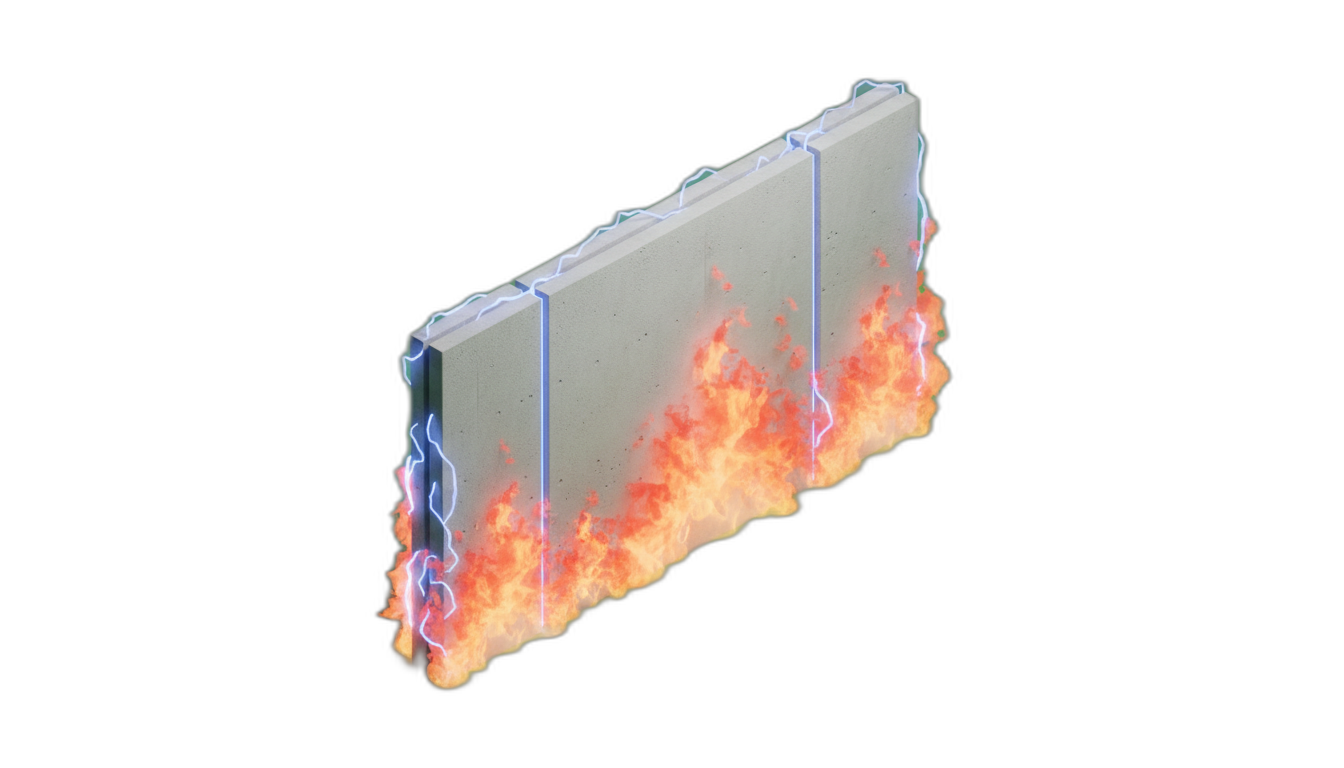
Precast concrete ranks among the most effective fire resistant construction materials available for commercial and industrial buildings
How Fire Resistant Construction Materials Are Rated
Fire resistance in construction materials is measured through standardized testing protocols that evaluate how long a building assembly maintains its structural integrity, thermal insulation, and fire containment capability under controlled fire exposure conditions. Understanding these ratings is essential for specifying fire resistant construction materials correctly.
ASTM E119 Standard Fire Test
The primary fire resistance test in North America is ASTM E119, which subjects building assemblies to a standard time-temperature curve reaching approximately 2,000°F. According to the National Institute of Standards and Technology (NIST), this test evaluates three critical performance criteria: structural integrity under load, thermal transmission through the assembly, and passage of flames or hot gases. Fire resistant construction materials must meet all three criteria for the rated duration.
Fire Rating Classifications
Building codes assign fire resistance ratings in hourly increments — typically 1-hour, 2-hour, 3-hour, or 4-hour. Higher ratings indicate longer periods of fire protection. The required rating depends on building type, occupancy classification, and the specific building element’s function. Precast concrete can achieve up to 4-hour fire resistance ratings through concrete cover thickness alone, without supplemental fireproofing materials.
Critical Safety Fact
Concrete is classified as a non-combustible material (Euroclass A1) — it does not burn, does not contribute fuel to a fire, does not emit toxic fumes when heated, and does not produce smoke. These inherent properties make precast concrete one of the most reliable fire resistant construction materials available.
Comprehensive Comparison of Fire Resistant Construction Materials
Engineers and architects evaluate multiple fire resistant construction materials when designing building fire protection systems. Each material offers distinct advantages and limitations that must be weighed against project requirements, budget constraints, and performance expectations.
Precast Concrete: Superior Inherent Fire Resistance
Precast concrete provides inherent fire resistance through the thermal properties of concrete itself — no additional fireproofing sprays, wraps, or coatings are required. Standard precast wall panels achieve 2-hour fire ratings with as little as 4 inches of thickness. Increasing concrete cover over reinforcement and panel thickness achieves 3-hour and 4-hour ratings. Concrete does not burn, melt, or deform at temperatures encountered in building fires.
The factory-controlled manufacturing environment ensures consistent concrete cover, density, and quality — factors that directly affect fire resistance performance. Unlike field-applied fireproofing, precast concrete’s fire resistance cannot be damaged during construction or degraded over time.
Structural Steel: Requires Supplemental Protection
Unprotected structural steel loses approximately 50% of its yield strength at around 1,100°F — well below temperatures reached in building fires. Steel requires supplemental fireproofing through spray-applied fire-resistive materials (SFRM), intumescent coatings, or encasement in concrete or gypsum assemblies. These coatings add significant cost and must be maintained throughout the building’s life.
SFRM coatings are vulnerable to damage during construction and renovation. Mechanical impacts, water exposure, and improper application can compromise fire protection — creating hidden vulnerabilities that may not be apparent until a fire occurs.
Concrete Masonry Units (CMU)
CMU walls provide good fire resistance, with filled and reinforced 8-inch blocks achieving 4-hour ratings. However, CMU construction is labor-intensive, slower to erect, and limited in span capability compared to precast concrete. CMU requires mortar joints that can be points of weakness in fire exposure if not properly filled and reinforced.
For large commercial and industrial applications, precast concrete panels offer superior speed of installation, longer spans, and more consistent fire resistance performance compared to field-laid CMU construction.
Mass Timber: Emerging but Combustible
Cross-laminated timber (CLT) and glulam products achieve fire resistance through charring — the outer layer chars and insulates the structural core. While mass timber can achieve 2-hour fire ratings through oversized members, it is fundamentally a combustible material that contributes fuel to a fire. Building code restrictions and insurance implications remain significant considerations for mass timber projects.
Mass timber requires careful detailing at connections, penetrations, and interfaces with other materials to maintain fire compartmentalization — complexities that precast concrete avoids entirely through its non-combustible nature.
Fire Resistant Construction Materials: Performance Comparison
The following comparison highlights how leading fire resistant construction materials perform across critical safety and performance metrics. This data helps project teams make informed material selections based on comprehensive fire safety analysis.
| Performance Metric | Precast Concrete | Protected Steel | CMU | Mass Timber |
|---|---|---|---|---|
| Maximum Fire Rating | 4 hours (inherent) | 4 hours (with SFRM) | 4 hours (filled) | 2 hours (charring) |
| Combustibility | Non-combustible (A1) | Non-combustible | Non-combustible | Combustible |
| Supplemental Fireproofing | Not required | Always required | Sometimes required | Char calculation required |
| Toxic Fume Emission | None | Coating dependent | None | Smoke and gases |
| Post-Fire Structural Integrity | Typically repairable | Often requires replacement | Usually repairable | Reduced section capacity |
| Insurance Impact | Lowest premiums | Moderate premiums | Low premiums | Higher premiums |
Why Precast Concrete Excels Among Fire Resistant Construction Materials
Precast concrete’s fire resistance stems from the fundamental thermal properties of concrete as a material. Unlike materials that depend on coatings, treatments, or specialized detailing for fire protection, concrete provides inherent, permanent, and maintenance-free fire resistance that does not degrade over time.
Thermal Conductivity and Heat Absorption
Concrete’s relatively low thermal conductivity means heat transfers slowly through precast panels and structural members. During a fire, the unexposed face of a concrete wall remains at safe temperatures long after the fire-exposed face reaches extreme temperatures. This thermal lag provides critical evacuation time and prevents fire spread between compartments. Concrete also absorbs significant thermal energy, effectively acting as a heat sink that slows fire progression.
No Deformation Under Fire Exposure
Unlike steel, which softens and deforms at fire temperatures, concrete maintains its dimensional stability throughout fire exposure. Precast concrete columns, beams, and wall panels continue to carry design loads during fire conditions — preventing the progressive structural collapse that is the greatest threat to occupant safety and firefighter operations in building fires.
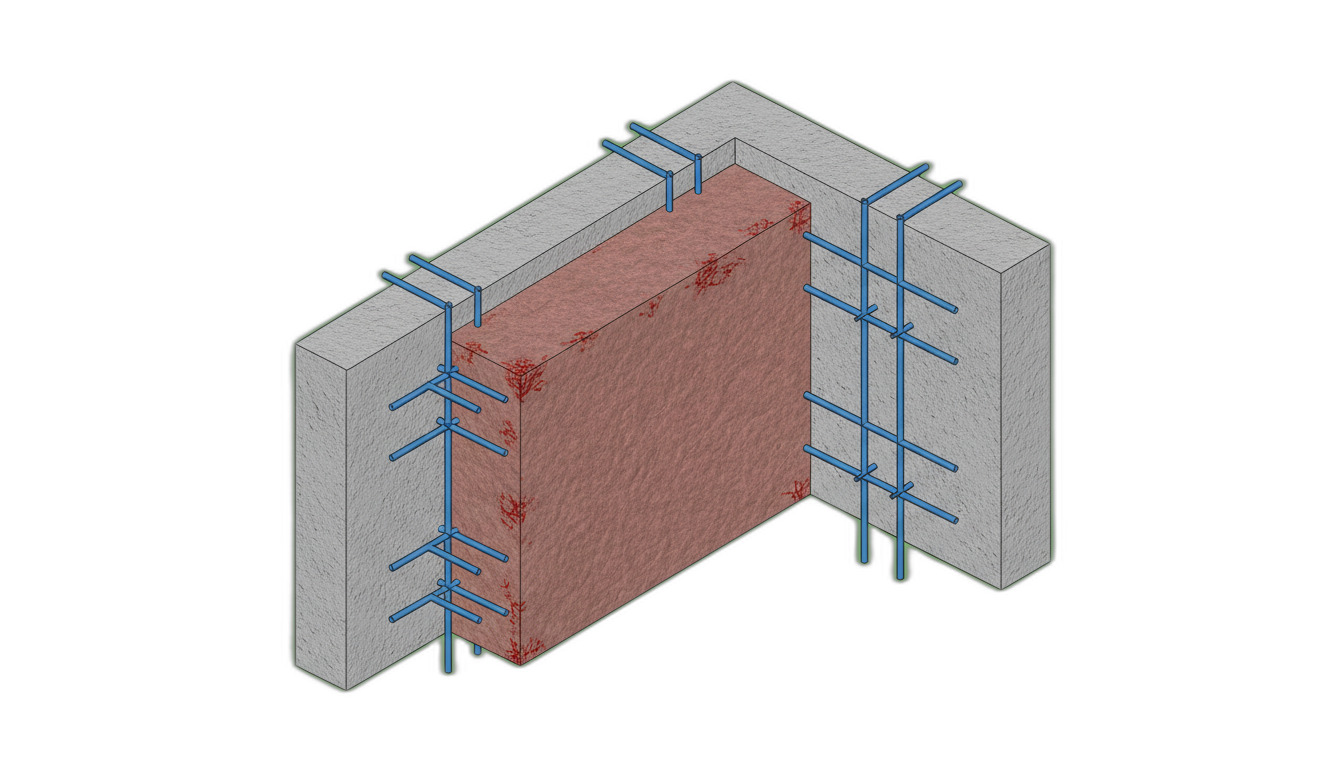
Factory-manufactured precast concrete delivers consistent fire resistance performance through controlled quality processes
Post-Fire Recovery and Reusability
Buildings constructed with precast concrete fire resistant construction materials frequently return to service after fire events with targeted repairs rather than complete structural replacement. Surface spalling and cosmetic damage can be repaired, while the structural core typically retains its load-carrying capacity. This resilience translates to dramatically lower post-fire recovery costs and faster return to occupancy compared to steel-framed or timber buildings.
Precast concrete does not burn, does not melt, does not release toxic fumes, and does not require supplemental fireproofing — delivering the most reliable fire protection of any structural building material available today.
Heldenfels Enterprises Engineering Team
Building Code Requirements for Fire Resistant Construction Materials
The International Building Code (IBC) establishes minimum fire resistance requirements based on building occupancy type, height, area, and construction classification. Understanding these requirements ensures proper specification of fire resistant construction materials that meet or exceed code mandates.
Construction Type Classifications
The IBC defines five construction types (Type I through Type V), with Type I requiring the highest fire resistance ratings. Type I and Type II construction — required for most high-rise and large commercial buildings — mandate non-combustible materials throughout. Precast concrete inherently qualifies for Type I and Type II construction without additional treatments or certifications. Key requirements include:
- Type IA: 3-hour structural frame, 2-hour floors, 3-hour bearing walls — achievable with standard precast sections
- Type IB: 2-hour structural frame, 2-hour floors, 2-hour bearing walls — readily achieved with precast concrete
- Type IIA: 1-hour requirements throughout — easily met with minimum precast thicknesses
Heldenfels Fire Safety Advantage
Our precast wall panels, structural columns, and floor systems achieve up to 4-hour fire resistance ratings through concrete thickness and reinforcement cover alone — with no supplemental fireproofing materials required. This eliminates ongoing maintenance costs and ensures fire protection performance for the entire life of the structure.
Practical Applications of Fire Resistant Precast Concrete
Fire resistant construction materials play critical roles across diverse building types and applications. Precast concrete’s combination of structural performance and inherent fire resistance makes it particularly valuable for applications where fire safety requirements are stringent.
Data Centers and Critical Facilities
Data centers demand fire resistant construction materials that protect irreplaceable equipment and maintain operational continuity. Precast concrete enclosures provide fire compartmentalization without the moisture, dust, and ongoing maintenance concerns associated with spray-applied fireproofing on steel structures.
Parking Structures
Parking garages face unique fire risks from vehicle fires that produce intense localized heat. Precast concrete parking structures withstand vehicle fire exposure without structural compromise — a critical advantage given that modern electric vehicles can generate more intense and prolonged fire events than conventional vehicles.
Industrial and Manufacturing Facilities
Industrial buildings housing flammable materials, high-value equipment, or critical processes require the most dependable fire resistant construction materials available. Precast concrete walls serve as fire barriers that contain fires within specific zones, protecting adjacent operations and limiting overall property damage.
Conclusion: Precast Concrete Sets the Standard for Fire Resistant Construction
When evaluating fire resistant construction materials, precast concrete consistently delivers the highest combination of fire resistance, structural performance, and long-term reliability available in the construction industry. Its inherent non-combustibility, maintenance-free fire protection, and proven post-fire recoverability make it the definitive choice for projects where fire safety cannot be compromised.
At Heldenfels Enterprises, we manufacture precast concrete wall panels, structural columns, beams, and specialty components that meet the most demanding fire resistance requirements. Our factory-controlled production ensures consistent concrete cover, density, and quality — the factors that determine real-world fire performance. Contact our engineering team today to discuss how precast concrete can strengthen your project’s fire safety strategy while reducing construction costs and timelines.
Plan Fire-Resistant Precast Concrete Into Your Next Project
Work with Heldenfels to specify precast concrete components that support structural performance, fire resistance, and project requirements. Speak with our team about your design, specifications, and construction needs.
Discuss Your Project