Precast Concrete Walling: Proven Benefits and Essential Applications
A practical guide to why factory-cast wall systems are the preferred envelope for fast-tracked commercial, infrastructure, and institutional projects.
Precast concrete walling has become the backbone of fast-tracked commercial, infrastructure, and industrial projects across the country. Owners and contractors looking for predictable schedules, controlled quality, and long-term durability are increasingly choosing factory-cast wall systems over traditional cast-in-place construction. At Heldenfels Enterprises, we have spent over a century engineering and manufacturing precast solutions, and the rapid adoption of plant-built wall panels is one of the clearest signals that the industry is moving toward smarter, more efficient methods.
What Is Precast Concrete Walling?
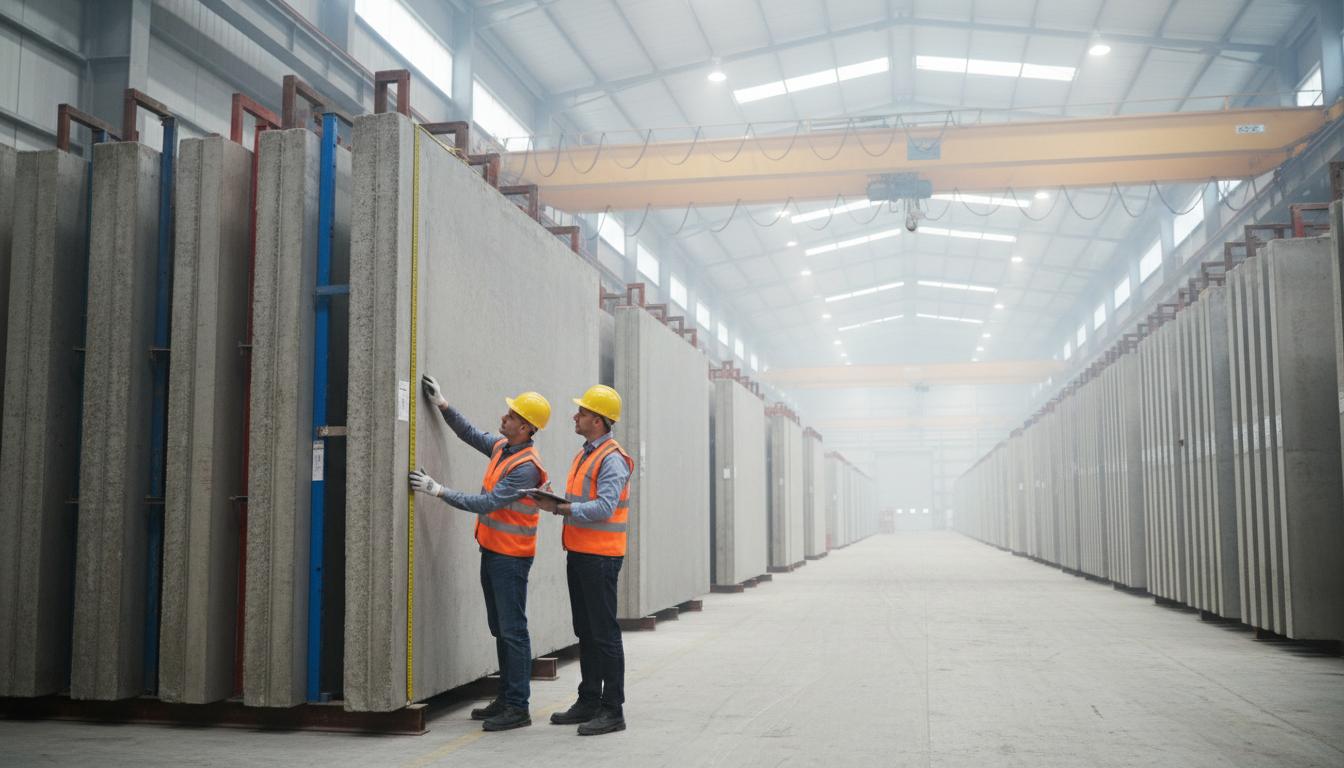
Precast concrete walling refers to load-bearing or non-load-bearing wall components that are cast off-site in a controlled production facility, cured to specified strengths, and then shipped to the project site for assembly. Each panel is reinforced with rebar or post-tensioned strands, designed to meet engineered loads, and finished with the architectural texture or color the design requires. Once delivered, the panels are erected by crane and connected to columns, slabs, and footings using engineered hardware.
Two main panel categories dominate today’s market. Solid panels deliver maximum strength and are typical in industrial and infrastructure applications. Sandwich panels combine two concrete wythes around a layer of rigid insulation, producing a thermally efficient enclosure that meets modern energy codes without secondary insulation work in the field. For projects that demand longer spans, slimmer profiles, or higher loads, precast prestressed wall panels extend the structural capability further by introducing tensioned strands during casting.
How Plant-Cast Walls Differ From Tilt-Up
Tilt-up walls are still poured on the project site, on temporary casting beds, and then lifted into place. Plant-built walls are produced inside a permanent facility, where mix designs, curing temperatures, reinforcement placement, and dimensional tolerances are tightly controlled. The factory environment removes weather as a variable and allows much more elaborate finishes, embedded plates, and architectural details than field-poured tilt-up can practically deliver.
Structural Benefits of Precast Concrete Walling
The structural advantages of factory-built walls are rooted in plant production. Concrete is batched, placed, and cured under conditions that simply cannot be replicated on a windswept job site. The result is consistent compressive strength, predictable dimensional tolerances, and a finish quality that holds up across thousands of square feet of envelope.
Durability is another defining benefit. Properly engineered panels resist fire, moisture, impact, and storm forces far better than wood-framed or light-gauge metal alternatives. Independent testing tracked by the Precast/Prestressed Concrete Institute consistently shows precast assemblies meeting or exceeding fire ratings, blast performance, and seismic detailing requirements. For owners thinking in 50 and 75 year asset terms, that durability translates directly into lower repair costs and fewer disruptive maintenance events over the life of the building.
Speed of construction is a structural benefit as much as a schedule benefit. Because panels arrive engineered, finished, and ready to set, the framing phase compresses dramatically. A tilt-up wall might take weeks of forming, pouring, and curing on the project site. A plant-cast wall package goes up in days once the foundations are ready, freeing the trades behind the envelope to start sooner.
Plant-controlled production is the single greatest reason factory-built panels outperform field-cast alternatives on quality, schedule, and long-term durability.
Common Applications Across the Built Environment
Transportation & Infrastructure
Highway sound walls, retaining walls flanking grade changes, and bridge abutments are now overwhelmingly precast. State DOTs favor the predictable schedule and the resistance to vehicle impact and weather.
Commercial & Industrial
Warehouses, distribution centers, manufacturing plants, and big-box retail rely on plant-built envelopes. Large panels, fast erection, and ready-to-paint surfaces are tough to beat for schedule-driven owners.
Schools, Civic & Healthcare
Institutional projects lean on precast for fire resistance, security performance, and acoustic separation. Form liners, exposed aggregate, and custom colors meet demanding architectural requirements.
Stadiums & Arenas
Precast supplies both the structural shell and the architectural exterior in a single delivered system. Combined with risers, columns, and seating units, it produces a complete superstructure on accelerated schedules.
Architectural Versatility
Modern panels are no longer the gray slabs of the 1970s. Form liners replicate brick, stone, board-formed concrete, and custom relief patterns. Pigments, acid etching, sandblasting, and polishing produce finishes that meet the same aesthetic bar as cast stone or cut limestone, with the structural performance of solid concrete behind them.
Installation Methods That Cut Project Schedules
The installation sequence is engineered well before the first panel ships. Shop drawings define exact panel locations, lift points, embeds, and connection hardware so the field crew can move through the layout without surprises. BIM coordination flags conflicts with mechanical, electrical, and plumbing routes during design, not during erection.
Foundations are prepared while panels are still in production. Anchor bolts, leveling shims, and grout pads are installed to engineered tolerances. When trucks roll in, panels are lifted directly off the trailer and set into position by a crane crew, eliminating the laydown yard problem that complicates stick-built construction. Connections happen quickly: bolted plate connections, welded embeds, or grouted splice sleeves tie wall panels to structural columns for wall support and to floor diaphragms above and below.
Bracing remains in place until the diaphragms are completed, after which each panel becomes a fully engaged part of the lateral load path. A typical 100,000 square foot industrial wall package can be erected in two to three weeks with a single crane and a small crew, a pace that cast-in-place methods simply cannot match.
Cost Benefits and Long-Term Value
Cost conversations around precast concrete walling tend to start with material price comparisons and end with total cost of ownership. Per square foot, plant-built panels are competitive with masonry and tilt-up, sometimes higher up front, sometimes lower depending on volume and finish. The savings compound across the broader project.
- Compressed schedules reduce general conditions, financing carry, and supervision time.
- Reduced site labor lowers exposure to weather delays and skilled-trades shortages.
- Built-in insulation in sandwich panels eliminates a separate insulation contract.
- Predictable surfaces cut the cost of interior and exterior finishes.
- Minimal maintenance over the life of the building keeps operating costs low.
Over the life of the building, the system continues to pay back. Maintenance is minimal compared to EIFS or metal panel systems. Energy performance stays consistent rather than degrading as insulation settles or air barriers fail. Resale and refinance valuations benefit from the structural permanence that lenders and underwriters recognize in precast assemblies.
Choosing the Right Partner
The benefits described above are only fully realized when the precast manufacturer is engaged early and the design is coordinated with production realities. Engineering decisions about panel size, connection type, lift orientation, and finish all interact with plant capacity, transport limits, and crane logistics. A team that has worked through hundreds of projects can flag constraints during design rather than during construction, when changes are exponentially more expensive.
Heldenfels Enterprises has been engineering and manufacturing precast for over a century. Our plant supplies wall panels, structural members, and architectural elements to projects across Texas and the broader Southeast, from highway infrastructure and industrial facilities to schools, civic buildings, and stadiums. We help design teams understand the tradeoffs that drive panel performance, schedule, and cost so the wall system that ships to the site is the one the project actually needs.
Planning a Project With Precast Concrete Walling?
Bring us your concept drawings, structural intent, and schedule. Our engineers will help you turn factory-built walls into the predictable, high-performance shell your project deserves.
Start the Conversation