
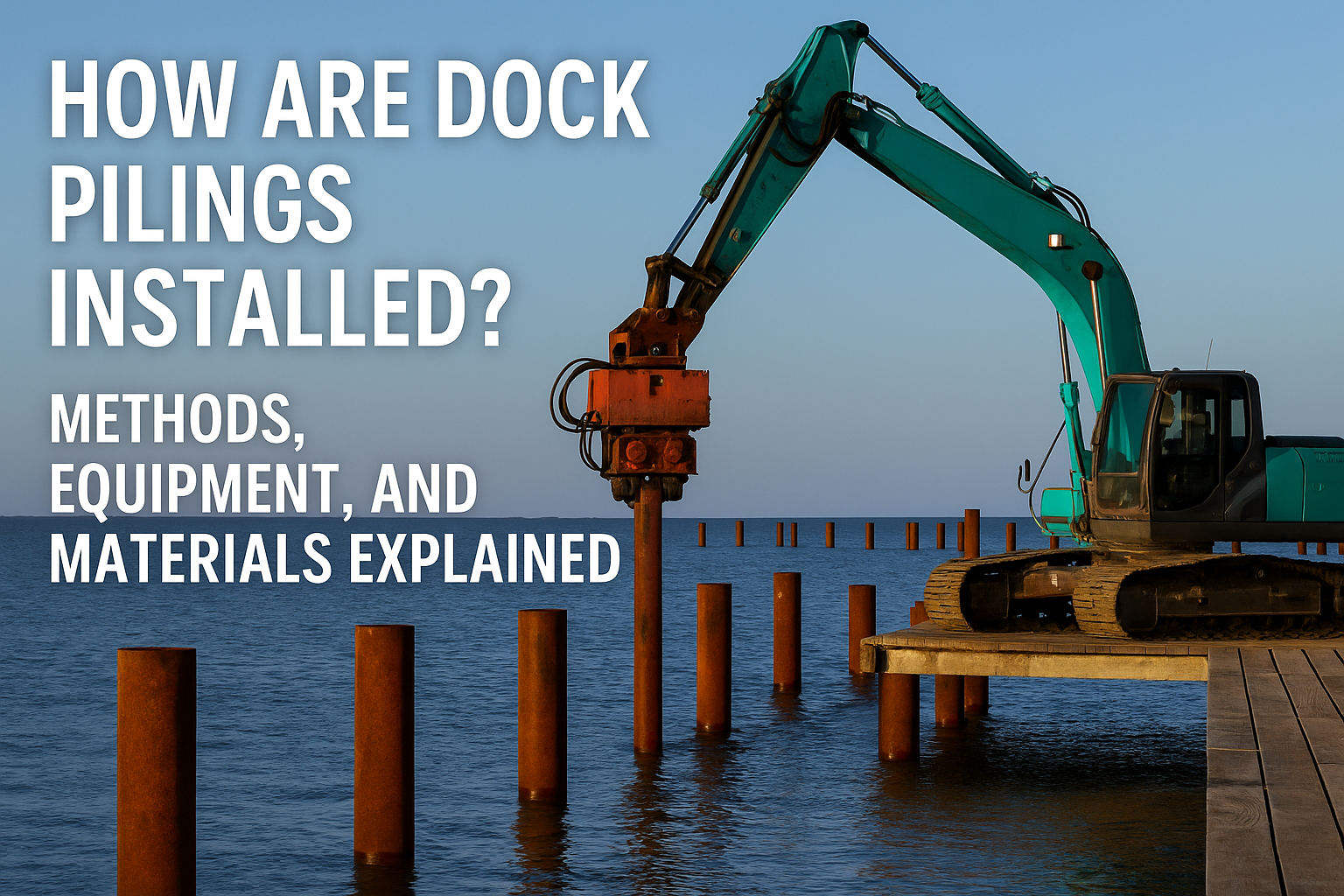
How Are Dock Pilings Installed? Methods, Equipment, and Marine Construction Basics
Learn how dock pilings are installed, which methods are used in marine construction, and why pile material, site conditions, and installation quality matter.
Dock pilings are the structural support beneath piers, wharfs, marinas, ship berths, industrial platforms, and other waterfront structures. When people ask how are dock pilings installed, the simple answer is that they are driven, drilled, jetted, or vibrated into place depending on the site conditions. The better answer is that each method must match the soil, water depth, pile material, design load, access, and environmental requirements.
That matters because a dock piling is not just a post in the water; it is a foundation element that transfers loads into deeper, more stable soil or bearing layers. For heavy-duty marine and industrial work, Heldenfels supports projects with precast and prestressed concrete components used in docks, piers, wharfs, ship berths, ramps, erosion protection, and related marine applications.
This guide explains how are dock pilings installed, when each method makes sense, and why material selection has a major impact on long-term performance.
How Are Dock Pilings Installed in Marine Projects?

The simplest answer to how are dock pilings installed is this: piles are positioned at engineered locations, aligned vertically or at a specified batter angle, and advanced into the soil using jetting, impact driving, vibratory driving, drilling, or a combination of methods.
- Review geotechnical data and structural plans.
- Mark the pile layout and confirm elevations.
- Mobilize cranes, barges, pile-driving equipment, or drilling equipment.
- Position each pile at the correct location and alignment.
- Advance the pile into the soil using the approved installation method.
- Confirm depth, resistance, alignment, and cut-off elevation.
- Connect the installed piles to caps, beams, deck slabs, or other structural components.
In plain terms, how are dock pilings installed depends on what the soil will allow, what the structure must support, and what the project specifications require.
For larger projects, probe piles or test piles may be used to confirm subsurface conditions and installation behavior before production driving. The U.S. Army Corps of Engineers’ Design of Pile Foundations manual notes that pile load testing programs may begin with probe piles to gather driving information, especially in variable foundation conditions.
Why Dock Pilings Matter
Dock pilings are the foundation system for many marine structures. They support vertical loads from decking, vehicles, equipment, pedestrians, and stored materials. They also help resist lateral forces from waves, currents, vessel impact, wind, and shifting water levels.
This is why how are dock pilings installed cannot be treated as a minor construction detail. The pile may be hidden below the waterline after completion, but it controls much of the structure’s long-term stability.
A weak dock deck is obvious. A weak foundation is worse because the damage often appears only after movement, settlement, cracking, misalignment, or corrosion has already started. In marine construction, the expensive mistake is usually not the pile itself. It is choosing the wrong pile, installing it with the wrong method, or failing to match the foundation system to the actual site conditions.
Common Dock Piling Materials
Different projects use different pile materials. The right choice depends on budget, load requirements, exposure conditions, service life expectations, and the type of structure.
Timber Pilings
Timber piles are common in small docks and light waterfront projects because they are easy to handle and install. They can perform well when properly treated, but they are vulnerable to marine borers, decay, impact damage, and long-term deterioration. For high-load commercial or industrial marine infrastructure, they are usually the wrong choice.
Steel Pilings
Steel piles are used when projects need high capacity, long lengths, or installation through difficult soils. Common types include H-piles and pipe piles. Their main drawback is corrosion in saltwater and splash-zone exposure, so protective coatings, cathodic protection, or added corrosion allowance may be required.
Concrete Pilings
Concrete piles are common in marine structures because they offer strength, durability, and resistance to harsh exposure. Precast and prestressed options add better quality control because they are made before reaching the jobsite. For docks, piers, bridges, and industrial foundations, they provide reliable capacity and long-term performance in demanding marine environments.
Composite Pilings
Composite piles are engineered from materials like fiberglass-reinforced polymers or recycled plastics. They resist rot and corrosion, making them useful for lighter-duty or specialty waterfront projects. For large marine infrastructure, engineers should review them carefully against steel or prestressed concrete options.
Dock Piling Installation Methods Used in Marine Construction
Dock piling installation is not handled the same way on every project. The best method depends on soil conditions, water depth, pile material, load requirements, equipment access, and environmental limits. Below are the most common methods used to install dock pilings and where each one typically makes sense.
Method 1: Jetting Dock Pilings
Jetting uses high-pressure water to loosen soil beneath and around the pile. As the soil is disturbed, the pile settles downward under its own weight or with additional assistance from equipment.
When explaining how are dock pilings installed, jetting is usually one of the first methods people hear about because it is common for smaller docks and sandy soils.
When Jetting Works Best
Jetting is most effective in loose sand, soft soils, and shallow-water conditions. It can be useful when vibration or impact needs to be reduced, or when access is limited.
Limitations of Jetting
Jetting is not a universal solution. It can disturb surrounding soil, reduce lateral support if done carelessly, and may not provide enough penetration or bearing capacity for heavier structures. It is usually not the best primary method for high-load commercial or industrial marine foundations unless the engineer specifically allows it.
In heavier marine construction, jetting may be used only as an aid to help piles reach grade before final driving or verification.
Method 2: Impact Driving Dock Pilings
Impact driving uses a pile hammer to deliver repeated blows to the top of the pile. Each blow advances the pile deeper into the soil. The process continues until the pile reaches the required depth, resistance, or design criteria.
For many engineered marine structures, impact driving is the clearest answer to how are dock pilings installed because it allows crews to advance piles into deeper or denser soil layers while tracking driving resistance.
Why Impact Driving Is Used
Impact driving is common for structural piles because it can develop high load capacity and provides useful field information during installation. Contractors and engineers can observe blow counts, penetration rates, hammer performance, and pile behavior.
That field feedback matters. If a pile refuses too early, moves out of alignment, or behaves differently than expected, the team can investigate before the entire foundation system is completed.
Equipment Used for Impact Driving
Impact driving may involve diesel hammers, hydraulic impact hammers, air hammers, cranes, leads, templates, pile cushions, helmets, and marine barges. The exact setup depends on pile type, pile size, water depth, access, and project requirements.
For prestressed concrete piles, the hammer, cushion, helmet, and installation procedure must be selected carefully to reduce the risk of pile damage during driving.
Method 3: Vibratory Driving Dock Pilings
Vibratory hammers use rapid vibration to reduce soil resistance and help the pile move downward. Instead of striking the pile with repeated impacts, the equipment vibrates the pile into place.
This method is another important part of understanding how are dock pilings installed, especially in granular soils where vibration can be effective.
Advantages of Vibratory Driving
Vibratory driving can be faster and quieter than impact driving in some conditions. It is often useful for sheet piles, steel piles, temporary works, and certain marine construction tasks.
Limitations of Vibratory Driving
Vibratory driving does not always provide the same direct capacity confirmation as impact driving. In some projects, piles may be vibrated partway and then finished with an impact hammer to verify resistance.
Soil type matters. Vibratory methods often perform well in sands and granular soils but may be less effective in stiff clays or dense layers. Nearby structures, utilities, and environmental restrictions may also affect whether vibration is acceptable.
Method 4: Drilling and Predrilling
Drilling or predrilling creates a hole before the pile is installed. The pile may then be placed, driven, grouted, or concreted depending on the design.
For difficult sites, how are dock pilings installed may involve drilling because the soil or subsurface conditions make direct driving impractical.
When Drilling Is Needed
Drilling may be used when piles must pass through hard layers, dense soils, rock, debris, or obstructions. It may also help control alignment in tight-access projects or reduce driving vibration near sensitive structures.
Why Drilling Must Be Engineered Carefully
Predrilling can help installation, but it can also reduce soil resistance if overused or performed incorrectly. The drilled hole size, depth, backfill, grout, and final pile installation method must match the project specifications.
This is not a place for guesswork. If the pile depends on skin friction or end bearing, careless drilling can compromise the foundation.
How Are Dock Pilings Installed When Using Precast Concrete Piles?
For heavy-duty marine structures, concrete dock pilings are usually manufactured as precast or prestressed piles rather than poured in place at the waterfront. They are produced in a controlled plant environment, delivered to the jobsite, lifted into position, and installed according to the project’s engineering requirements. This allows better control over dimensions, reinforcement, concrete quality, curing, prestressing, and handling than on-site placement near water.
- Engineering review and pile design.
- Precast/prestressed pile manufacturing.
- Delivery to the marine project site.
- Handling and lifting with proper pick points.
- Positioning by crane, barge, leads, or template.
- Driving, drilling, or assisted installation as specified.
- Cut-off, inspection, and connection to pile caps or deck systems.
This is where Heldenfels is directly relevant. Heldenfels provides prestressed concrete piles and marine precast concrete solutions for applications such as docks, piers, ship berths, wharfs, ramps, and other demanding marine structures. For owners and contractors, that means the piling is not treated as a commodity post. It is part of an engineered structural system.
Site Conditions That Affect Installation
No honest contractor should answer how are dock pilings installed without first asking about the site. Soil, water, access, and exposure conditions control the installation plan.
Soil Conditions
Loose sand, soft clay, stiff clay, dense sand, gravel, rock, and fill behave differently. A method that works cleanly in one soil may fail in another. Geotechnical data helps determine pile length, expected resistance, installation method, and whether predrilling or testing is needed.
Water Depth and Access
Shallow-water projects may be reached with land-based equipment or small barges. Deeper or larger projects may require marine cranes, spud barges, templates, and specialized crews. Access affects cost and sequencing. A pile that is easy to install from land may become much more complicated when equipment must work from floating platforms.
Loads and Structure Type
A residential dock, fishing pier, wharf, ship berth, and industrial platform do not carry the same loads. Heavier structures may require larger piles, deeper embedment, batter piles, pile caps, and stricter testing.
Environmental Exposure
Saltwater, tidal cycles, wet-dry exposure, storm surge, vessel wake, and floating debris all affect pile performance. The splash zone is especially aggressive because piles are repeatedly exposed to moisture, oxygen, chlorides, and impact. This is one reason durable materials matter in marine work. Saving money on the foundation material can be a terrible trade if it shortens service life or increases maintenance.
Equipment Used for Dock Piling Installation
The equipment depends on the project size and installation method. Common equipment includes:
- Cranes
- Barges
- Pile-driving leads
- Impact hammers
- Vibratory hammers
- Hydraulic power packs
- Water jetting pumps
- Drilling rigs
- Templates and guides
- Pile helmets, cushions, and caps
- Survey and layout equipment
- Cut-off saws or concrete cutting tools
For engineered marine projects, equipment selection is not just a contractor preference. It affects pile drivability, alignment, noise, vibration, production rate, and the risk of damaging the pile.
Permitting and Environmental Considerations
Marine construction often requires permits or agency review. Requirements vary by location, waterway, project size, environmental impact, and whether the work affects navigable waters, wetlands, sensitive habitat, or shoreline conditions.
- Work windows
- Turbidity control
- Noise and vibration
- Protected species
- Wetlands and habitat impacts
- Navigation
- Disposal of removed materials
- Construction access
Do not treat permitting as paperwork that can be handled after the fact. It can affect the installation method, schedule, equipment, and allowable construction sequence.
Questions to Ask Before Hiring a Marine Piling Contractor
If you are trying to understand how are dock pilings installed for a real project, ask better questions before hiring anyone.
- What soil information are you using?
- What pile material do you recommend, and why?
- Will the piles be jetted, driven, vibrated, drilled, or installed with a combination of methods?
- How will pile capacity or refusal be verified?
- What equipment will be used?
- How will pile alignment be controlled?
- What permits are required?
- How will the installation method protect nearby structures?
- What is the expected service life of the pile material?
- How will the piles connect to caps, beams, or deck slabs?
Weak contractors talk only about price and schedule. Strong contractors talk about soil, loads, tolerances, installation records, and long-term performance.
Why Prestressed Concrete Piles Are Often Used in Marine Work
Prestressed concrete piles are a strong fit for many marine and industrial structures because they are built for load capacity, durability, and harsh exposure.
The advantages include:
- High structural capacity
- Long service life
- Resistance to corrosion compared with exposed steel
- Controlled plant manufacturing
- Consistent dimensions and quality
- Suitability for docks, piers, wharfs, bridges, and industrial foundations
- Compatibility with precast caps, slabs, and other marine components
For Heldenfels projects, the value goes beyond individual piles because they can support complete precast marine structures. Relevant components include prestressed concrete piling, deck slabs, precast caps, sheet piles, docks, piers, ship berths, wharfs, ramps, erosion protection, and pipe racks. For serious marine construction, controlled precast production is a stronger and more accurate solution than suggesting every concrete dock piling is mixed and poured beside the water.
Final Thoughts: Installing Dock Pilings the Right Way
Dock pilings are installed correctly by matching the pile material, equipment, and method to the project’s soil, water depth, loads, exposure, access limits, permits, and service-life expectations. A basic method may work for small docks, but commercial, municipal, and industrial marine structures need a more disciplined foundation plan. That means using the right pile type, accurate layout, proper installation records, and durable materials that can withstand the marine environment.
That is why precast and prestressed concrete piles deserve serious consideration for demanding marine applications. They bring controlled manufacturing, high capacity, durability, and compatibility with other precast marine components. For docks, piers, wharfs, ship berths, ramps, and industrial marine structures, that is the difference between simply putting piles in the water and building a foundation that is meant to last.
Need Prestressed Concrete Piles for a Marine Project?
Heldenfels provides precast and prestressed concrete solutions for demanding marine and industrial applications, including docks, piers, wharfs, ship berths, ramps, and related structures.
Contact us todayFrequently Asked Questions About Dock Piling Installation
How Are Dock Pilings Installed?
How are dock pilings installed depends on the soil, pile material, water depth, equipment access, and structural requirements. Common methods include jetting, impact driving, vibratory driving, drilling, and predrilling. For heavier marine structures, piles are often driven or installed using engineered procedures that verify depth, resistance, alignment, and capacity.
What Is the Best Method for Installing Dock Pilings?
There is no single best method for every project. Jetting may work in loose sandy soils. Impact driving may be better for structural piles and deeper bearing. Vibratory driving can be efficient in granular soils. Drilling or predrilling may be needed for hard layers, rock, or obstructions.
Are Concrete Pilings Better Than Wood Pilings?
Concrete pilings are often better for heavy-duty marine structures because they provide greater durability, strength, and resistance to harsh exposure. Wood may still be used for smaller docks, but it is more vulnerable to decay, marine borers, and long-term deterioration.
Can Dock Pilings Be Installed Without Heavy Equipment?
Small timber piles may sometimes be installed with lighter equipment, especially in shallow water and soft soils. Larger commercial, industrial, or prestressed concrete piles usually require cranes, pile-driving equipment, barges, drilling equipment, or other specialized tools.
How Deep Should Dock Pilings Go?
Pile depth depends on soil conditions, design loads, water depth, scour risk, and engineering requirements. There is no universal depth that works for every dock. A geotechnical review and structural design should determine the required embedment.
Do Dock Pilings Need Permits?
Many marine piling projects require permits, especially if the work affects navigable waters, wetlands, shoreline areas, or protected habitats. Requirements vary by location and project type, so permitting should be reviewed early.