

How to Install Precast Columns: Step-by-Step Guide for Safe Installation
A practical guide to planning, lifting, setting, bracing, and inspecting precast columns safely on industrial and commercial jobsites.
Precast columns are not installed by guesswork. They are heavily engineered components that must be planned, lifted, aligned, braced, connected, and inspected in the right sequence.
This guide explains how to install precast columns on industrial, infrastructure, and commercial projects. It is written for owners, contractors, and project teams who need a practical overview before coordinating with the precast manufacturer, engineer of record, crane contractor, and erection crew. For project-specific requirements, always follow the approved erection drawings, connection details, lift plan, site safety plan, and the engineer of record’s instructions.
What Precast Column Installation Actually Involves
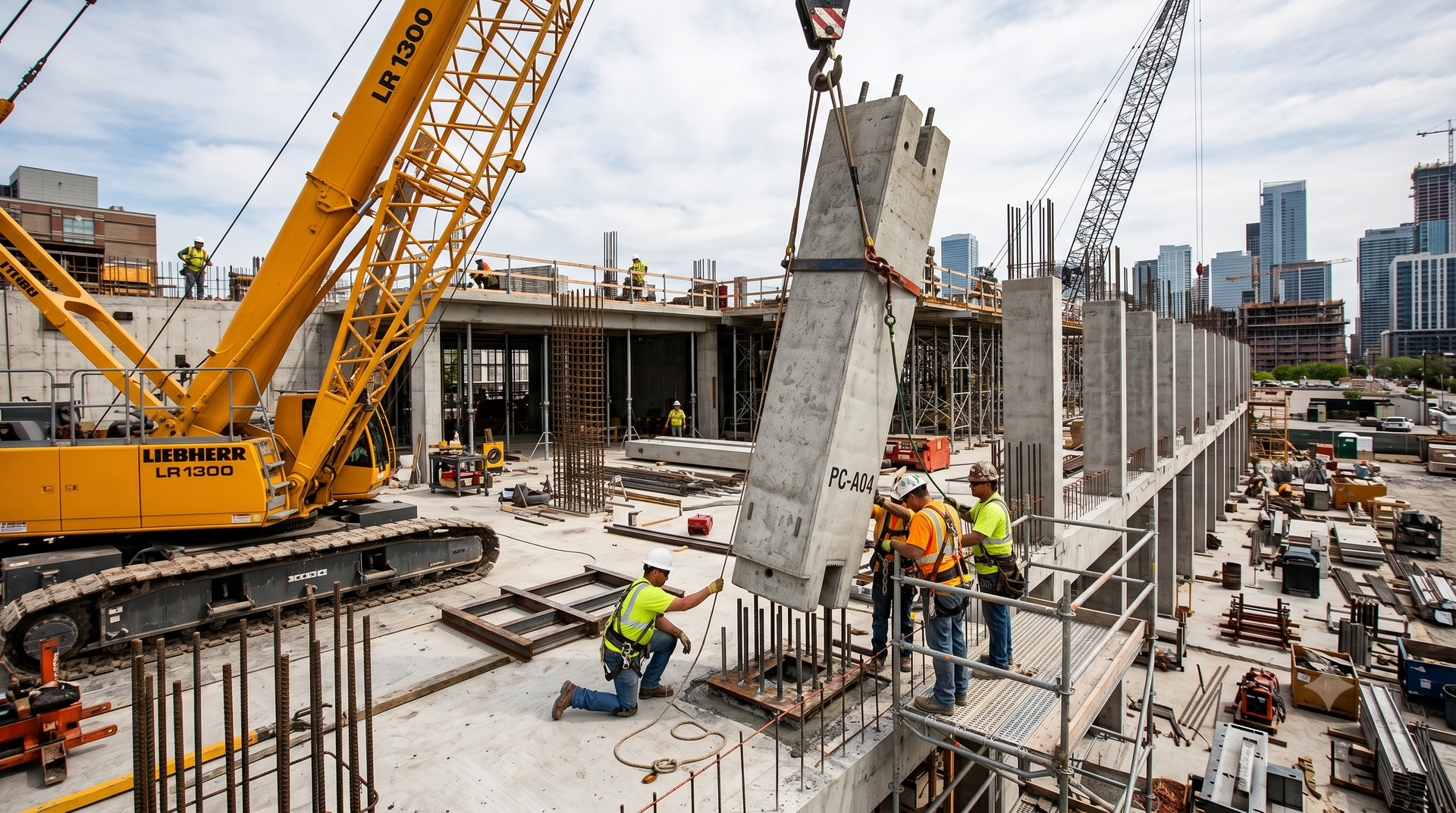
To understand how to install precast columns, start with one basic fact: the column arrives at the jobsite already cast and cured. The field work is not about making the column. It is about safely moving it from the truck to the foundation and locking it into the structural system.
A typical installation includes:
- Reviewing approved shop drawings and erection drawings
- Confirming crane access, delivery sequence, and laydown space
- Verifying lifting inserts, rigging points, column weight, and center of gravity
- Preparing the foundation or supporting interface
- Setting the column with a crane
- Plumbing, aligning, and temporarily stabilizing the column
- Completing the permanent connection
- Inspecting line, grade, plumbness, grout, bolts, welds, and other connection details
That sounds simple on paper. In the field, it is where good planning either pays off or exposes every weak assumption in the schedule.
Before Installation: Review Drawings, Access, and Crane Requirements
The first step in how to install precast columns happens before the column reaches the site. The erection team should review the approved drawings and confirm:
- Column marks and orientation
- Final installed location
- Column dimensions and weight
- Embedded plates, sleeves, dowels, anchors, or connection hardware
- Lifting insert locations
- Temporary bracing requirements
- Required bearing elevations
- Grout or connection material requirements
- Tolerances for plumbness, alignment, and elevation
Crane planning matters just as much. A column that looks manageable on a drawing may create a real problem if the crane cannot reach the pick point at the required radius.
Site access should also be checked before delivery. Trucks need a safe route in and out. The crane needs stable ground. The crew needs enough space to unload, swing, rotate, and set the piece without creating conflicts with equipment, power lines, traffic, excavations, or other trades.
“Field insight: The worst installation problems usually do not come from the column itself. They come from bad assumptions about access, sequencing, or foundation readiness. If the anchor layout is wrong or the crane pad is an afterthought, the field crew pays for it immediately.”
Prepare the Foundation or Support Interface
A precast column is only as reliable as the interface it lands on. Before the setting begins, the crew should verify that the foundation, pedestal, pocket, pier, pile cap, or bearing surface matches the approved documents. Survey control should be established and checked against the layout.
Depending on the connection design, preparation may include:
- Cleaning bearing surfaces
- Checking anchor rod location and projection
- Confirming dowel or sleeve alignment
- Placing bearing pads or leveling shims
- Verifying grout pocket dimensions
- Checking elevations before the pick
- Removing debris, standing water, loose concrete, or obstructions
- Confirming that the foundation has reached the required strength
Do not treat this as a casual checklist. When people search for how to install precast columns, they often focus on the crane pick. The real make-or-break moment is frequently the foundation check. If the interface is off, the column may not seat correctly, align correctly, or connect correctly.
How to Install Precast Columns Safely During the Lift
The actual lift should follow the approved lift plan. No field improvisation should override engineered lifting points or documented rigging requirements.
A safe column pick usually includes:
- Confirming the column mark and orientation
- Inspecting lifting inserts and rigging hardware
- Connecting slings, shackles, spreader bars, or other rigging as required
- Establishing an exclusion zone around the pick and swing path
- Lifting slowly to confirm balance
- Using taglines where appropriate to control rotation
- Moving the column into position without workers under the suspended load
- Lowering the column onto the prepared support
- Checking line, grade, elevation, and plumbness before release
For safety planning, crews should review OSHA’s precast concrete requirements before erection. OSHA states that precast wall units, structural framing, and tilt-up panels must be adequately supported to prevent overturning or collapse until permanent connections are completed. The same section also covers lifting insert capacity, lifting hardware capacity, and restrictions on workers standing beneath precast members during lifting.
For large structural columns, small mistakes get expensive fast. A column weighing tens of thousands of pounds does not forgive poor communication, unclear hand signals, unstable ground, or rushed rigging checks.
Temporary Bracing and Stability
Temporary stability is one of the most important parts of how to install precast columns. The crane should not be released until the column is adequately supported according to the erection plan. Temporary stability may come from:
- Engineered braces
- Column shoes
- Bolted temporary connections
- Welded temporary connections
- Shims and bearing conditions
- Other support systems shown on the erection drawings
The exact method depends on the column, connection type, project design, and engineer requirements. This is also where the wording in many generic articles gets sloppy. The column itself is not being “cured” in the field. The precast column has already been cured before delivery. What may need time is the grout, closure concrete, or connection material used to complete the permanent connection.
That distinction matters. Bad terminology creates bad expectations on-site.
Complete the Permanent Connection
Permanent connections vary by project. Common precast column connection approaches may include:
- Grouted sleeve connections
- Dowel connections
- Anchor rod and base plate systems
- Bolted column shoes
- Embedded plates
- Welded connections
- Pocket foundations
- Non-shrink grout beneath bearing areas or base plates
The crew should complete the connection exactly as shown in the approved documents. That means using the correct grout, torque values, weld procedures, bearing materials, inspection steps, and curing or strength-gain requirements for the connection materials.
If the project uses grout sleeves or column shoes, coordination with the precast supplier matters early. Heldenfels’ precast structural column capabilities include engineered column solutions for demanding industrial applications, including options such as grout sleeves, column shoes, and footprint templates.
Inspection and Quality Checks After Setting
After a column is set, the team should not assume the work is complete. The installation should be checked before the next structural pieces depend on it. Post-installation checks may include:
- Column plumbness, line, and grid location
- Bearing elevation and shim placement
- Anchor engagement and bolt torque
- Weld inspection and grout placement
- Grout strength or required cure time
- Brace condition and final connection completion
- Damage from shipping, lifting, or setting
Documenting these checks protects the schedule. It also prevents a small installation issue from turning into a bigger frame alignment problem later. For industrial work, the tolerance stack-up can become brutal. A slightly missed column location may affect beams, wall panels, pipe racks, equipment supports, roof framing, or follow-on trades. Precision during erection is not a luxury. It is what keeps the rest of the job from fighting the structure.
Common Mistakes to Avoid During Precast Column Installation
Learning how to install precast columns also means knowing what not to do. Avoid these mistakes:
- Setting columns before the foundation is ready or failing to verify anchor/dowel locations
- Using generic rigging instead of the engineered, approved lift plan
- Releasing the crane before temporary stability is completely secured
- Ignoring engineered column orientation marks
- Assuming grout, welds, or bolts are correct without specialized field inspection
- Letting other trades work below or near suspended members
- Treating erection tolerances as suggestions or skipping quality documentation
The fastest erection plan is not the one that skips checks. It is the one that avoids rework.
When to Involve the Precast Supplier Early
The best time to discuss installation is not when the truck arrives. It is during design, detailing, and preconstruction. Early supplier coordination can help clarify column sizing, shipping limits, crane pick assumptions, connection options, embedded hardware, erection sequencing, and site constraints.
We provide precast and prestressed concrete solutions for industrial, marine, highway, bridge, and building projects. On complex industrial sites such as data centers, LNG facilities, wastewater treatment plants, semiconductor manufacturing plants, power facilities, and food processing facilities, the precast system should be planned around the erection strategy from the start.
Learn more about our industrial precast concrete capabilities and how early coordination can help align fabrication, delivery, and installation.
Quick Checklist: How to Install Precast Columns
Use this checklist as a planning aid, not as a substitute for project documents.
| Erection Phase | Action Items & Key Requirements |
|---|---|
| Before Delivery | Confirm approved erection drawings and column marks; verify crane capacity, access roads, foundation dimensions, and anchor rods. |
| During Erection | Inspect columns pre-pick; use approved lifting inserts/rigging; maintain exclusion zones; check line, grade, and plumbness; secure temporary bracing before crane release. |
| After Setting | Complete permanent connections (welds, bolts, sleeves); place and cure specified grout; verify bearing conditions; document all checks before removing temporary bracing. |
Successful Precast Column Installation Starts Before Delivery
Knowing how to install precast columns is not just about the crane pick. It is about controlling every point of risk before the column is lifted, including the foundation interface, connection details, temporary bracing, site access, crane radius, and installation sequence. Before erection planning begins, project teams should confirm the column weight, lifting points, connection type, bearing conditions, and bracing requirements. If those details are still vague, the project is not ready for a clean installation.
For complex projects, bring Heldenfels into the planning conversation early so column fabrication, shipping constraints, connection details, and field installation requirements are addressed before erection begins.
Streamline Your Structural Precast Project
Get our engineered precast solutions and field installation expertise on your side. Contact our structural concrete team today to coordinate your upcoming project.
Get in touch with us