
Sauna Construction Materials: Heat-Resistant Options That Last Decades
Ask ten people how to build a sauna and you will get ten different answers, most of them about which wood to line the room with. That matters, but it skips the harder question. A sauna cycles from 40 degrees on a winter morning to 190 degrees an hour later, then back again, hundreds of times a year, while pouring humidity into every surface. The right sauna construction materials are the ones that survive that cycle for thirty years without warping, rotting, or cracking, not the ones that photograph well the day the build is finished.
At Heldenfels, we have manufactured precast, prestressed concrete in Texas since 1909, everything from bridge girders to industrial foundations that live in punishing heat and moisture for a century. That perspective changes how we look at a sauna. Below, we break the material question into the two decisions that actually matter, the interior surfaces and the structural shell, and explain why precast concrete has quietly become one of the smartest choices for the parts of a sauna nobody sees.
- A sauna’s materials fail from repeated heat-and-moisture cycling, not from a single hot day, so durability under thermal shock is the real test.
- Interior linings and structural shells are two separate material decisions with very different requirements.
- Precast concrete brings high thermal mass, low permeability, and non-combustibility, which is exactly what an outdoor or commercial sauna shell needs.
- Plant-cast concrete cures in controlled conditions, so it resists moisture far better than a field-poured slab or a wood-framed base.
- For a small backyard barrel sauna, wood framing is fine; the concrete advantage shows up as the build gets larger, permanent, or commercial.
What a Sauna Actually Does to Its Materials
Before you can choose anything, you have to be honest about the environment. A working sauna is one of the most aggressive small-scale conditions a building material will ever face. The air swings through a 150-degree temperature range on a normal use cycle. Water gets thrown on hot rocks, flashes to steam, and drives moisture into the ceiling and upper walls. When the session ends, everything cools and that moisture wants to condense back out.
Three forces do the damage. Thermal expansion makes every material grow and shrink; when two bonded materials expand at different rates, joints open and fasteners loosen. Moisture soaks into anything porous, then freezes, mildews, or rots. And heat itself degrades adhesives, sealants, and untreated organic surfaces over time. Good sauna construction materials answer all three, not just the one you happened to think about.
Choosing Sauna Construction Materials for the Interior and the Shell
The single most useful thing you can do is stop treating the sauna as one material problem. It is two. The interior is the surface people touch and breathe next to. The shell is the structure that holds the heat in and keeps the weather out. They have almost nothing in common, and the best sauna construction materials for one are wrong for the other.
The Interior Lining
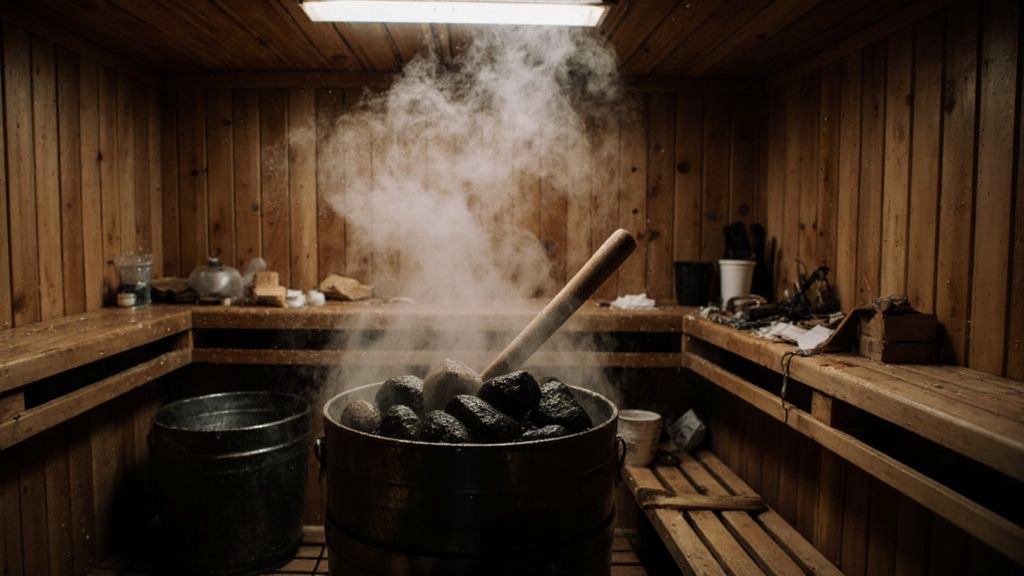
Inside the hot room, you want a low-density softwood that stays cool to the touch, does not leach resin, and shrugs off humidity. Western red cedar is the classic for a reason: it resists rot naturally, holds a stable temperature under your hand, and smells right. Nordic spruce, aspen, and thermally modified poplar are all sound alternatives, and aspen in particular is prized for benches because it barely heats up and has no knots to leak sap.
What you avoid inside is just as important. Skip dense hardwoods and any pressure-treated or chemically finished lumber, because heat can drive off compounds you do not want to breathe. Skip metal where skin will touch it, since it will burn. And never seal interior sauna wood with a film-forming varnish; use a dedicated paraffin-based sauna wax if you use anything at all.
The Structural Shell and Foundation
The shell is where most sauna builds quietly go wrong, and it is where material science earns its keep. A wood-framed wall on a wood-framed floor works for a small indoor kit, but for anything outdoors, permanent, or built for daily commercial use, the shell has to fight ground moisture, weather, and fire risk on top of the interior heat load. This is exactly the arena precast concrete was built for, and it is why our precast wall panels for moisture-resistant construction and engineered slabs show up in demanding environments across Texas.
Why Precast Concrete Is a Smart Sauna Construction Material
Concrete has an image problem in the sauna world; people picture a cold, damp basement. Modern precast concrete is nearly the opposite of that, and three of its properties line up almost perfectly with what a sauna shell needs.
Thermal Mass That Works With the Stove, Not Against It
A sauna’s whole job is to reach a target temperature and hold it. High thermal mass means a material absorbs heat slowly and releases it slowly, so a concrete shell buffers the swings, steadies the room once it is up to temperature, and keeps radiating gentle warmth after the stove cycles down. A thin wood-framed box, by contrast, heats fast and dumps heat fast, which is why cheap saunas feel harsh and never quite settle. This is the same principle we engineer into specialized equipment foundations, where a mass of concrete tames vibration and temperature change for the machinery sitting on it.
Moisture Resistance From the Way It Is Cured
Precast concrete is cast and cured in a controlled plant, not poured in a muddy yard and left to the weather. That controlled cure yields dense, low-permeability concrete with far fewer of the voids and micro-cracks that let water migrate. For a sauna, that means a shell and slab that do not wick ground moisture up into the room, do not host mildew in hidden cavities, and do not rot the way a wood sill plate eventually will. It is the durability logic behind our broader look at the most durable construction materials, and moisture is usually the deciding factor.
Non-Combustible by Nature
A sauna combines an intense heat source, dry timber, and hours of unattended operation, so fire is a genuine design concern, not a theoretical one. Concrete does not burn and does not feed a fire, which is why it anchors so much of what we cover in our guide to fire-resistant construction materials. Using a non-combustible shell around the stove zone, or a concrete hearth and heat wall behind the heater, buys a margin of safety that no wood assembly can match.
Matching the Material to the Build
None of this means you should pour a bunker for a backyard barrel sauna. Honest material selection is about scale and permanence:
- Small indoor or barrel saunas: a wood frame on a sound, moisture-isolated base is proportionate and cost-effective. Precast is overkill here.
- Outdoor, in-ground, or hillside saunas: a precast slab and lower wall course fight ground moisture and frost far better than treated lumber, and they will still be sound decades later.
- Commercial, spa, and multi-user saunas: daily cycling, code requirements, and liability all push toward a non-combustible, low-maintenance concrete shell with a wood interior fit-out.
The pattern is the same one we see across construction: the interior finish is a matter of taste, but the shell and foundation are engineering decisions that determine whether the whole thing is still standing and dry in twenty-five years. Get the hidden materials right and the visible ones get to simply look good.
Building Something That Has to Last?
Whether it is a commercial wellness facility, an outdoor structure, or an industrial project, the shell and foundation decide the lifespan. Heldenfels has engineered precast and prestressed concrete for Texas heat and moisture since 1909, PCI-certified and plant-cast in San Marcos.
Tell us what you are building and we will tell you honestly whether precast is the right call for the structural work.
Contact Us About Your Project