
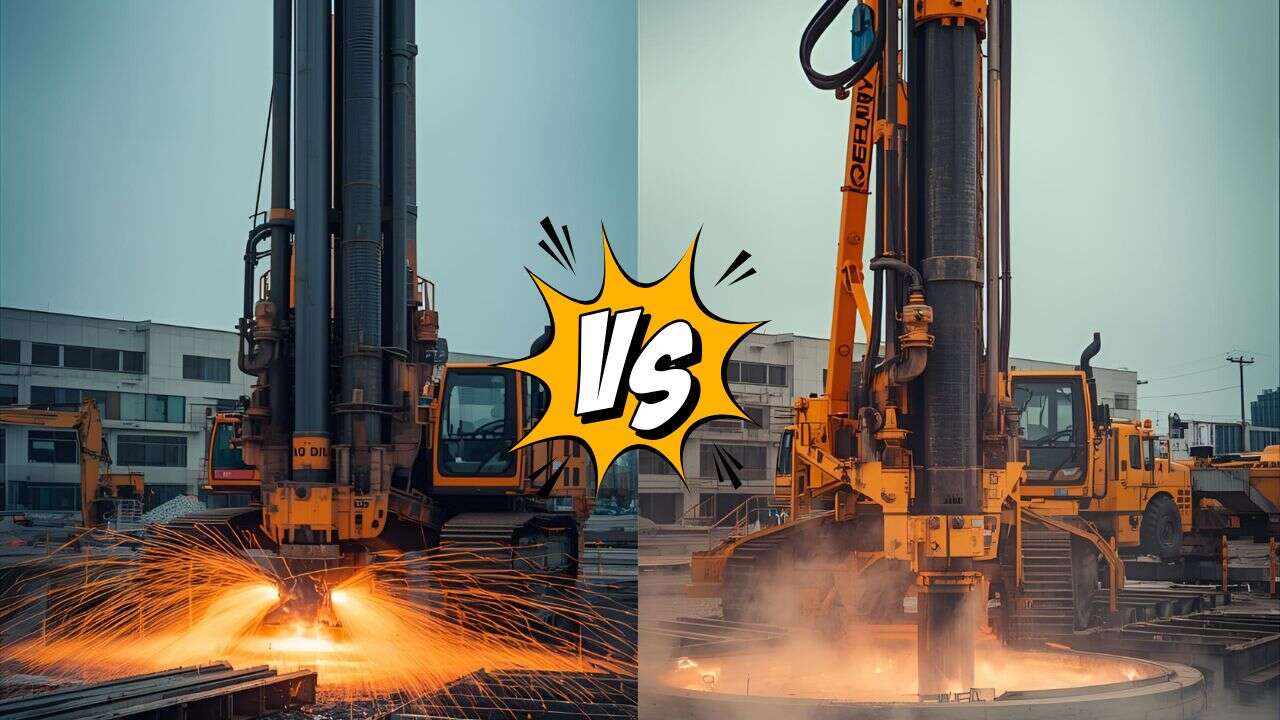
Driven Piles vs Drilled Shafts: The Ultimate Engineering and Economic Guide
Selecting between displacement and excavation foundation methods directly impacts project risk profiles, subsurface load distribution, and structural execution costs.
Choosing between driven piles vs drilled shafts establishes the structural reliability, environmental risk profile, and baseline capitalization of every heavy civil development project. Navigating this selection requires matching complex geotechnical data with long-term structural load demands to prevent catastrophic cost overruns or schedule delays.
The choice between foundational systems is one of the most highly scrutinized decisions during the early design phase of infrastructure, industrial, and marine developments. Global infrastructure investments demand foundation systems that minimize long-term settlement while optimizing installation velocity. In this comprehensive engineering guide, we break down the mechanical classifications, side-by-side trade-offs, hidden project expenditures, and selection frameworks that project owners must evaluate when comparing deep foundation options.

Geotechnical Selection Variables for Deep Foundations
Choosing between displacement piles and bored foundations is not about picking a universally superior method, but about matching the foundation system to the specific conditions of the project site. Geotechnical engineers must assess subsurface stratigraphy, including soil density, cohesion, and consolidation history, to determine how the ground will respond to installation. Forcing the wrong system into a complex soil profile can compromise foundation performance and put the structural integrity of the entire superstructure at risk.
- Soil Matrix Profile: The presence of loose cohesionless sands, stiff overconsolidated clays, or organic silt layers.
- Hydrogeological Baseline: The absolute depth of the local water table and the presence of artesian water pressures.
- Superstructure Loading: Concentrated, high-magnitude vertical point loads versus widespread, dynamic lateral load distributions.
- Environmental Thresholds: Local municipal noise ordinances and strict peak particle velocity vibration limits.
Hydrogeological baselines also introduce immense engineering risks during construction. A high water table complicates subsurface work by introducing the threat of borehole cave-ins or hydrostatic uplift forces. When contrasting driven piles vs drilled shafts in high-water environments, construction teams must balance the cost of water mitigation systems against the speed of prefabricated elements that bypass groundwater issues entirely.
Mechanical Classifications of Deep Foundations
At their core mechanical level, deep foundation elements serve the same structural purpose. They bypass weak, near-surface soils to transfer massive superstructure loads down to deeper, highly competent strata or solid bedrock. However, their installation mechanics and interaction with the surrounding soil are completely different. The Deep Foundations Institute (DFI) maintains continuous industry-wide technical committees and international installation standards for both classifications to advance safety and technological efficiency across global heavy civil sectors.
Driven Piles: The Displacement Solution
Driven elements are prefabricated structural members manufactured off-site and mechanically forced into the ground using specialized impact or vibratory hammers. These elements are frequently fabricated as high-strength prestressed concrete piles, structural steel H-piles, or heavy-duty steel pipe configurations. Because the structural member is built in a controlled environment prior to installation, material quality is highly consistent and verified before it ever arrives at the job site.
Mechanically, these are classified as displacement piles. As the hammer forces the column into the earth, it does not remove any soil. Instead, it forces the native soil outward and downward, compacting and densifying the surrounding soil matrix. This lateral displacement significantly increases the effective stress of the soil, which increases the skin friction capacity along the shaft of the pile. Furthermore, the installation process acts as a continuous quality control test. Engineers can monitor the blow counts per foot to get a real-time empirical validation of the soil bearing capacity.
Drilled Shafts: The Excavation Solution
Conversely, drilled shafts, often referred to as caissons, rely on a cast-in-place, soil-removal methodology. Instead of forcing a prefabricated member into the earth, a high-torque rotary drilling rig uses specialized augers or drilling buckets to excavate a large-diameter borehole directly into the subgrade. This excavation method means that the native soil is completely removed from the ground and brought to the surface as drill spoil.
Once the borehole reaches its targeted design depth and the base is thoroughly cleaned of loose debris, a custom-fabricated reinforcing steel rebar cage is lowered into the open hole. Concrete is then placed into the cavity using a tremie pipe to displace any remaining drilling fluids. This creates a massive, monolithic, high-capacity structural foundation element that is molded directly against the natural ground. Because these elements are built entirely in place, their eventual performance relies heavily on the quality of field execution and the skills of the installation crew, unlike factory-certified precast structural columns which arrive at the job site fully cured and ready for immediate load application.
Engineering Selection Matrix: Driven Piles vs. Drilled Shafts
To assist project managers and structural designers during early stage project scoping, evaluating driven piles vs drilled shafts across standard operational and performance metrics is essential. The following comparison table highlights how these two deep foundation methodologies deviate across critical field parameters:
| Engineering Parameter | Driven Piles | Drilled Shafts (Caissons) |
|---|---|---|
| Primary Physical Mechanism | Lateral soil displacement and surrounding soil matrix compaction. | Subsurface soil excavation and total native material removal. |
| Baseline Quality Assurance | High. Prefabricated in plant settings with real-time driving data. | Variable. Dependent on concrete placement flow and borehole stability. |
| Site Spoil and Waste Management | Zero. No native soil is brought to the surface during driving. | Extremely high. Generates tons of drill spoil requiring disposal. |
| Acoustic and Vibration Profiles | Elevated decibel levels and high ground vibration waves. | Low ambient noise floor with negligible ground vibrations. |
| Structural Loading Footprint | Optimized for distributing group loads over broad areas. | Ideal for massive, concentrated single-point structural loads. |
| Curing and Schedule Impact | Immediate load-bearing capacity. Pile caps follow driving quickly. | Requires multi-day concrete curing cycles before load application. |
An Engineering Perspective on Deep Foundation Selection
In heavy civil construction, selecting a deep foundation method is often less about basic material costs and more about controlling hidden project risks. On one coastal industrial project, drilled shafts appeared efficient on paper, but a fluid water table and caving sand layers quickly created major field problems once drilling began. The boreholes required costly slurry and temporary casing, while thousands of tons of wet spoil, constant hauling, and mud management disrupted site logistics and drove up indirect costs.
Recognizing the mounting delays, the project was re-engineered to utilize precast prestressed concrete driven piles. The shift completely transformed the job site dynamics. The pile driving rigs moved rapidly across the footprint without generating a single pound of drill spoil or requiring any slurry management systems. The driving resistance provided immediate verification of capacity, and the pile caps were poured almost immediately after driving. This real-world turnaround reinforces why evaluating foundation options requires looking past theoretical capacities to look at the actual realities of field installation.
Strategic Comparison of Structural Substructures
To build a robust foundation risk mitigation strategy, developers must systematically evaluate the individual advantages and operational limitations inherent to both methodologies. Every project site presents unique challenges that can magnify the benefits of one system while exposing the vulnerabilities of the other.
Driven Piles: Strategic Advantages
The principal advantage of driven systems is the exceptional level of quality control that comes with off-site fabrication. Because these elements are cast in controlled manufacturing plants, they are free from the field variables that often plague cast-in-place concrete, such as groundwater contamination or structural necking. Reviewing our specialized heavy civil precast capabilities demonstrates how rigorous quality control translates into predictable structural performance in the field.
Additionally, the speed of installation for displacement piles is unmatched in suitable soil conditions. A single pile driving crew can routinely install dozens of linear feet of foundation per shift, allowing following construction activities to proceed without waiting for long concrete curing cycles. Because this method displaces soil rather than excavating it, there are no expenses associated with hauling, testing, or disposing of contaminated drill spoil, which is a major advantage on brownfield industrial sites.
Driven Piles: Engineering Limitations
The primary constraint of driven elements involves the intense acoustic energy and ground vibrations generated by impact hammers. In dense urban centers, historic structural districts, or near sensitive medical facilities housing delicate calibration equipment, these vibrations can create structural liabilities and violate strict local noise ordinances. Pre-drilling can sometimes reduce these vibrations, but it adds an extra step to the installation process.
Subsurface obstructions also present a major technical risk for displacement systems. If a pile strikes a large underground boulder or a dense stratum of glacial till, the high impact energy can cause the pile to deflect or suffer structural damage. In extreme cases, hard driving can cause precast concrete piles to crack or structural steel piles to buckle, requiring expensive replacement piles to be driven adjacent to the damaged element.
Drilled Shafts: Strategic Advantages
Bored shafts are the preferred choice for projects located in constrained urban areas or environmentally sensitive zones. The rotary drilling process is quiet and generates minimal ground vibration, which eliminates the risk of settlement damage to neighboring historic footings or underground utility networks. This low-disturbance profile helps project owners avoid costly vibration claims and community complaints.
The immense structural capacity of a single large-diameter drilled shaft is another major advantage. A single shaft can often support the same massive load that would otherwise require a large cluster of smaller driven elements. By using one high-capacity element instead of a pile group, engineers can eliminate the need for large concrete pile caps, reducing the overall excavation depth and material costs for the superstructure foundations.
Drilled Shafts: Engineering Limitations
The primary vulnerability of drilled shafts is their total dependence on field execution quality. Because the structural concrete is poured deep underground into an open excavation, it is impossible to visually inspect the completed shaft body. Structural defects such as voids, soil inclusions, or concrete segregation caused by improper tremie placement can severely compromise the capacity of the shaft.
To reduce these risks, structural engineers must order specialized, expensive non-destructive testing, such as Crosshole Sonic Logging or Thermal Integrity Profiling. These testing methods require specialized third-party crews and introduce testing wait times into the schedule. Furthermore, managing, drying, and hauling away the massive amounts of wet drill spoil generated during excavation creates ongoing logistical challenges and adds substantial costs to the project budget.
Deep Dive Cost Analysis: Initial Capital vs Lifecycle Value
A comprehensive economic analysis of driven piles vs drilled shafts must look past the upfront cost per linear foot to evaluate the total impact on the project budget. Looking only at raw material and installation costs often leads to inaccurate budget projections, as indirect costs can quickly change the financial equation during construction.
When comparing direct costs, a single large drilled shaft is almost always more expensive to install than a single driven pile. However, because that single shaft can replace multiple driven piles, a fair comparison requires looking at the total cost of supporting a specific structural load footprint. This requires looking closely at the hidden expenses that come with each foundation method.
- Spoil Logistics and Environmental Fees: Excavating drilled shafts creates a continuous stream of wet soil that must be managed. If environmental testing reveals that the site contains contaminated soil, the cost of trucking and disposing of this material at specialized landfills can quickly double the foundation budget. Driven piles generate zero spoil, completely eliminating this financial risk.
- Quality Assurance Testing Tariffs: The capacity of driven piles is verified using real-time dynamic formula measurements and cost-effective testing during installation. Drilled shafts require specialized integrity testing to check for underground concrete defects, which adds direct testing fees and schedule delays while waiting for test results.
- Pile Cap and Superstructure Savings: Because drilled shafts handle concentrated point loads, they can often connect directly to columns without a large pile cap. Driven piles require a reinforced concrete pile cap to distribute structural loads across a pile group, which requires additional excavation, rebar, and concrete work.
- Schedule and Financing Costs: The rapid installation velocity of driven piles can take weeks off the project schedule. Shaving time off the construction schedule reduces overhead costs, cuts down on equipment rentals, and lowers interest payments on construction financing by allowing the asset to become operational sooner.
Lifecycle value matters in aggressive soils with high chloride or sulfate levels. Drilled shafts provide a thick concrete barrier, while modern precast driven piles use dense mixes and specialized curing for strong chemical resistance at a lower upfront cost. Owners should weigh long-term durability against installation cost to maximize ROI.
Conclusion: Strategic Synthesis for Foundation Engineering
Ultimately, navigating the choice between deep foundation methods is not about finding a universal construction solution. It is about executing a precise risk-mitigation strategy where your specific geotechnical data aligns with long-term structural requirements. As heavy civil projects scale in complexity and cost, a blind preference for either displacement or excavation methods can quickly erode a project’s profit margins and push timelines past critical paths.
For projects facing high water tables, soft organic stratigraphy, or compressed timelines, prefabricated displacement systems offer unmatched speed, clean job sites, and immediate engineering validation. Conversely, when space is constrained by urban infrastructure or when single-point loads demand direct socketing into deep bedrock, bored excavation shafts remain the primary structural necessity. Smart design teams look past the raw, immediate price per linear foot to carefully account for the indirect variables, including spoil logistics, testing delays, and down-funnel structural cap requirements.
Advance Your Substructure Project Scoping
Determining the optimal technical balance between driven piles vs drilled shafts requires a careful analysis of geotechnical data, structural loads, and project constraints. Our team can help you review your project specifications to optimize your deep foundation design for maximum efficiency.
Request a Free Consultation Now