
What Is Pre-Stressed Concrete? Uses, Benefits, and Where It Makes Sense
Learn how pre-stressed concrete works, why it is used in demanding structures, and where it delivers the most value in bridge, marine, industrial, and commercial projects.
If you have driven across a Texas overpass, walked through a stadium, parked in a multi-level garage, or seen piles installed near a port, you have likely relied on pre-stressed concrete without realizing it. That is usually how good structural concrete works: it carries heavy loads, controls cracking, and keeps performing long after construction is finished. So, what is pre-stressed concrete? It is concrete that has been intentionally compressed before it carries its working loads.
Concrete is naturally strong in compression but weaker in tension, so engineers use high-strength steel strands or tendons to pre-load the member. That built-in compression helps beams, piles, slabs, and panels resist bending and cracking before those stresses become a problem. For Heldenfels Enterprises, pre-stressed concrete is not just a technical definition; it is a practical solution used in precast/prestressed structures for highway, marine, industrial, and commercial projects across Texas.
How Pre-Stressed Concrete Works
To understand what is pre-stressed concrete, start with how concrete behaves under weight. A girder, pile, or beam bends when it carries a load, which can compress one side while pulling the other side into tension. Since concrete performs well in compression but poorly in tension, too much tensile stress can cause cracking, deflection, and long-term performance issues.
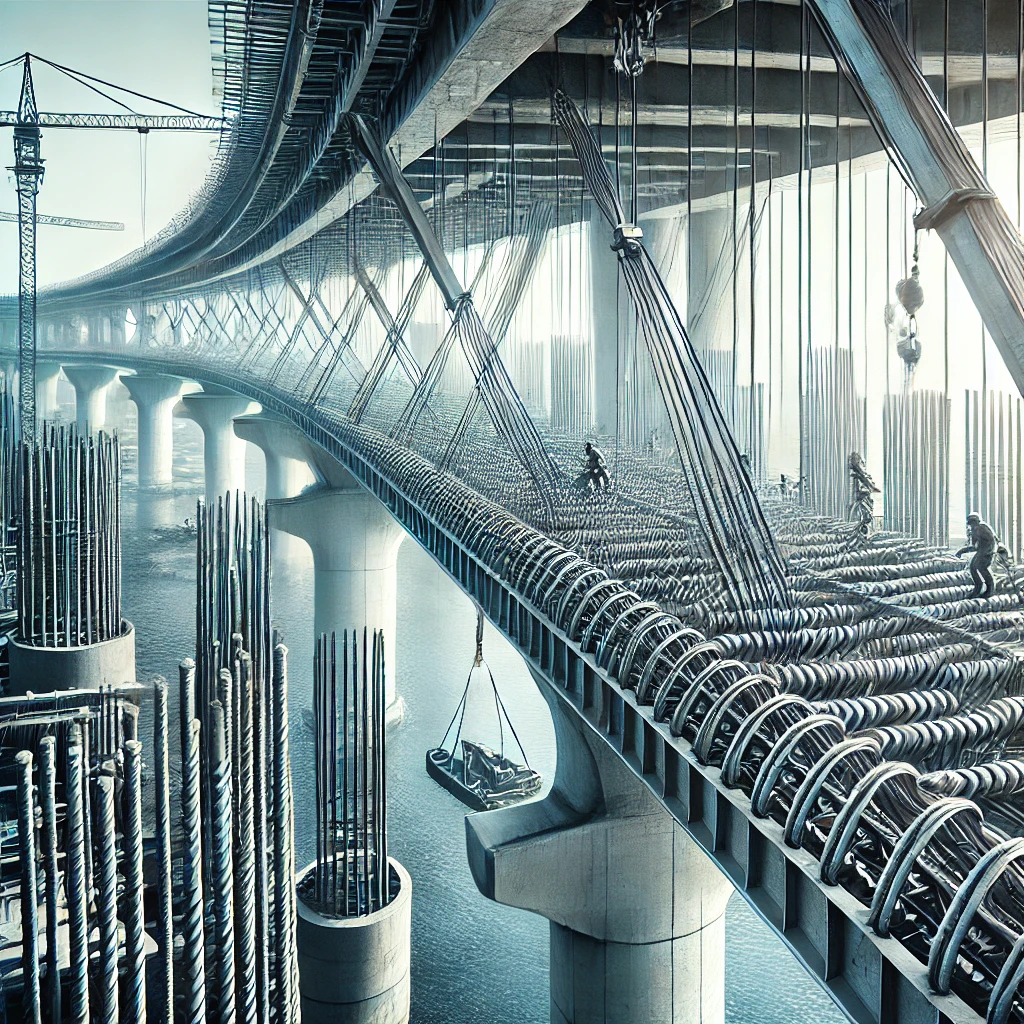
Pre-stressed concrete addresses this by adding compression before the member carries its full working load. In a pretensioned precast product, high-strength steel strands are stretched in a casting bed, concrete is placed around them, and the strands are released once the concrete reaches the required strength.
That force has to be carefully engineered, not guessed. Strand pattern, concrete strength, span, camber, lifting points, transport, and installation sequence all affect how the finished member performs. Our pretensioned precast/prestressed concrete is especially relevant because it is directly tied to products such as bridge girders, slab beams, box beams, piles, and wall panels.
For readers who want a deeper engineering reference, the Federal Highway Administration provides guidance on prestressed concrete girder superstructure design, which explains how these systems are used in bridge applications.
Why Pre-Stressed Concrete Is Used
When someone asks what is pre-stressed concrete, they are usually also asking why it is used instead of standard reinforced concrete. The answer depends on the project, but the main reasons are usually the same: longer spans, stronger load performance, better crack control, and more consistent production.
Here are common reasons why pre-stressed concrete is used:
It Supports Longer Spans
One of the biggest reasons pre-stressed concrete is used is its ability to span longer distances between supports. By controlling tensile stress and limiting cracking, it allows bridge girders and beams to reach farther than many conventional concrete options. That can reduce the need for extra piers, columns, or intermediate supports.
On highway projects, fewer supports can mean less traffic disruption during construction. On water crossings, it can also mean fewer obstructions in the channel. In parking structures or industrial facilities, longer spans can create more open and usable space.
It Handles Heavy Loads Efficiently
Pre-stressed concrete is also used because it performs well under heavy and repeated loads. Highway bridges must carry truck traffic, impact forces, environmental exposure, and constant use over time. Industrial facilities may need structural members that can support large equipment, pipe racks, crane loads, or heavy storage areas.
Marine structures have their own demands. Piles, caps, and beams may need to withstand driving forces, saltwater exposure, lateral loads, and long-term deterioration risks. In these conditions, pre-stressed concrete gives engineers a stronger and more predictable structural option.
It Helps Control Cracking
Another major benefit of pre-stressed concrete is better crack control. It does not make concrete indestructible, and it does not replace the need for proper detailing, drainage, cover, and maintenance. But it does reduce the tensile stress that causes many service cracks.
This matters most in aggressive environments. When cracks are fewer and tighter, embedded steel has better protection from moisture, chlorides, and other exposure risks. That can help improve durability and service life when the system is designed and maintained correctly.
It Provides Better Production Consistency
Precast/prestressed members are made in controlled plant conditions, not improvised entirely in the field. That gives producers better control over mix design, curing, strand placement, dimensional tolerances, finish, and inspection. For infrastructure work, that consistency is a major advantage.
This is especially valuable in Texas projects where traffic control, weather, tight construction windows, and jobsite access can complicate cast-in-place work. Manufacturing components off-site can reduce field uncertainty and help keep the project moving. The result is not just a stronger product but a more predictable construction process.
It Works Best When the Project Justifies It
Pre-stressed concrete is not automatically the best material for every job. Saying that would be lazy marketing, and serious contractors know better. It is the right choice when the design actually needs its advantages: span length, load capacity, crack control, controlled production, and faster erection.
The practical rule is simple. Use pre-stressed concrete where those benefits pay for themselves. Do not force it into a project where a simpler system can do the job just as well.
Common Applications: What Is Pre-Stressed Concrete Used For?
Pre-stressed concrete is used in projects where strength, span length, durability, and installation speed matter. Because it can be manufactured into different precast components, it supports a wide range of applications across transportation, marine, industrial, commercial, and public-use structures.
Here are some of the most common applications of pre-stressed concrete:
1. Bridge Girders and Highway Structures
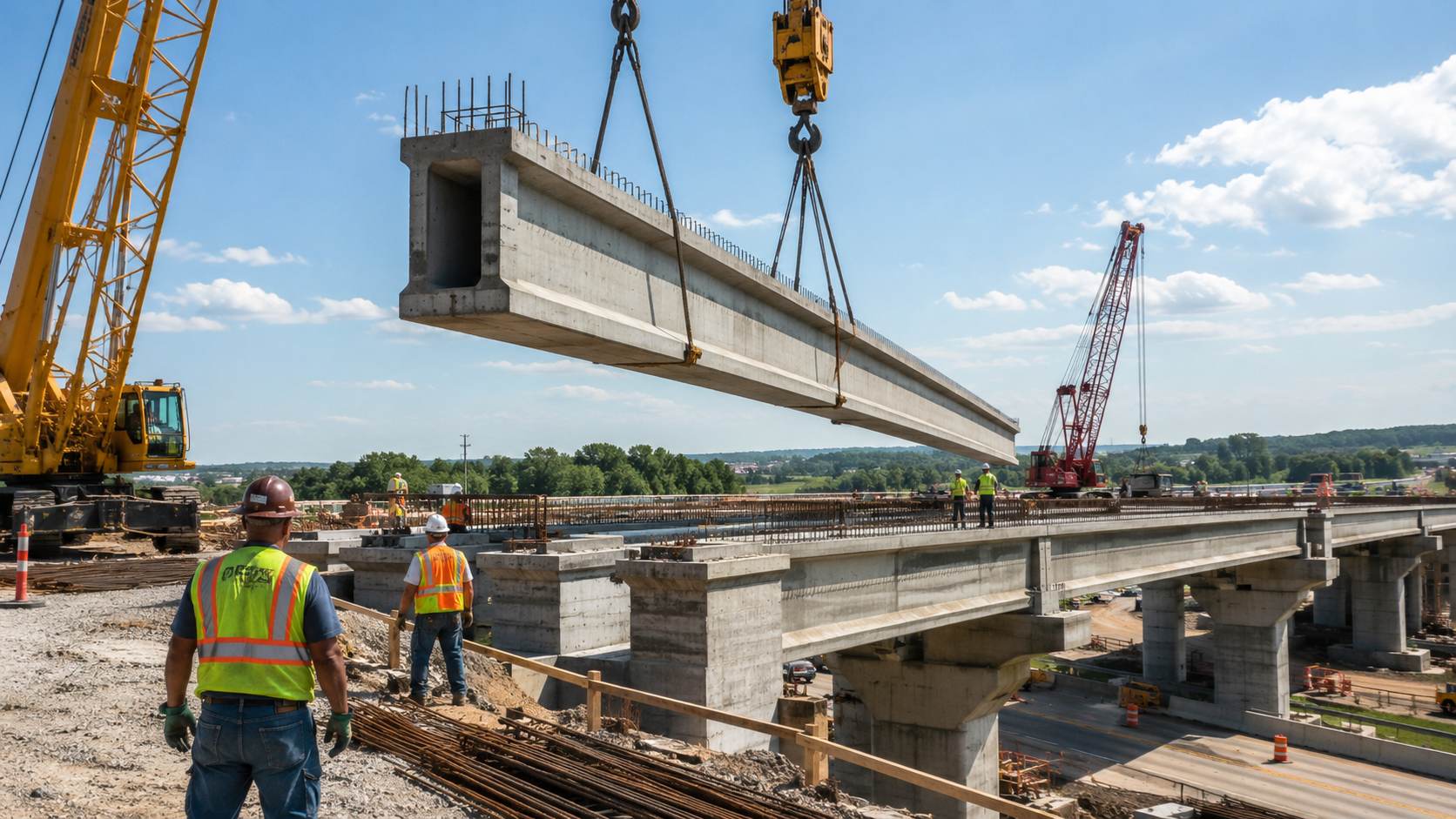
Bridge work is one of the clearest examples of what is pre-stressed concrete in real-world use. Precast prestressed bridge girders are used in highway overpasses, interchanges, river crossings, railroad bridges, and pedestrian bridges because they can support long spans, heavy loads, and faster installation. We produce TxDOT standard girder sizes such as TX-28, TX-34, TX-40, TX-46, TX-54, TX-62, TX-70, TX-82, and TX-84, along with wide flange girder options.
For contractors and public owners, the value is not just strength; it is schedule control. A girder manufactured off-site can arrive ready for crane placement, reducing field forming, curing time, and traffic exposure. In congested corridors, that can turn a difficult closure into a more manageable installation.
2. Prestressed Concrete Piles for Marine and Deep Foundations
Another direct answer to what is pre-stressed concrete is prestressed piling. Prestressed concrete piles are driven into the ground to transfer structural loads through weak surface soils into stronger bearing layers below. In marine, bridge, and industrial settings, they must also resist driving stresses, lateral loads, water exposure, and corrosion risks.
We offer prestressed concrete pile sizes from 12 inches by 12 inches through 30 inches by 30 inches for demanding foundation applications. These piles are heavy-duty structural elements used for bridges, docks, ports, retaining structures, industrial facilities, and commercial buildings. In marine work especially, pre-stressing helps the pile withstand installation stress, saltwater exposure, wet-dry cycles, scour, and long-term service loads.
3. Parking Structures
Parking garages are another common use case. Long-span beams, double tees, slabs, and other precast/prestressed elements can create open parking bays with fewer columns. That improves traffic flow, turning radius, sightlines, and usable stall layout.
Here, what is pre-stressed concrete comes down to efficiency. A parking structure carries repeated vehicle loads but also needs speed, predictable member quality, and clean installation. Precast/prestressed systems can shorten the on-site construction schedule because many pieces are produced while site work and foundations are still underway.
4. Industrial and Commercial Facilities
Industrial and commercial projects often need wide open areas, heavy load capacity, and structural systems that can stand up to constant use. Pre-stressed concrete can be used in beams, wall panels, slabs, equipment foundations, and other components where strength and reliability matter.
For warehouses, plants, terminals, and large commercial facilities, the benefit is not just durability but layout flexibility. By supporting longer spans and heavier loads, pre-stressed concrete can help reduce unnecessary supports and create more usable space.
5. Wall Panels, Seating, and Specialty Precast Components
Pre-stressed concrete is not limited to bridges and piles. It can also be used in wall panels, stadium seating risers, raker beams, slab beams, stairs, box beams, caps, and custom precast components.
The key is choosing the right component for the structure’s load path, exposure conditions, handling requirements, and erection plan. When those details are engineered correctly, pre-stressed concrete can support durable, efficient systems across transportation, commercial, industrial, and public-use projects.
Benefits of Pre-Stressed Concrete
Pre-stressed concrete is valuable because it is designed to solve real structural challenges before they become field problems. By adding compression into the member early, it can improve strength, control cracking, support longer spans, speed up installation, and deliver more reliable long-term performance.
Here are the benefits of pre-stressed concrete:
Higher Load Capacity
The compression introduced during pre-stressing helps the member resist service loads more efficiently. In bridge girders, that means supporting vehicle loads over longer spans. In piles, it means resisting driving stresses and structural loads. In industrial work, it means handling demanding service conditions without overcomplicating the structural system.
Better Crack Control
A central answer to what is pre-stressed concrete is crack control. Because the member starts with built-in compression, tensile stresses must overcome that compression before cracking becomes a concern. That does not remove the need for smart design, but it does improve serviceability when compared with many conventional reinforced concrete applications.
Longer Spans and Cleaner Layouts
Longer spans can mean fewer supports. Fewer supports can mean clearer water openings, easier traffic movement, better parking layouts, and more flexible building interiors. This is why the material shows up again and again in bridges, garages, warehouses, and heavy-use structures.
Faster Field Installation
Precast/prestressed members are built before they arrive on-site. That can compress the field schedule and reduce the amount of formwork, curing, and inspection that must happen in traffic, over water, or in crowded industrial settings. The benefit is not just speed; it is shifting more work into a controlled plant environment.
Long Service Life
Durability depends on design, mix quality, cover, exposure class, drainage, detailing, installation, and maintenance. Still, properly designed precast/prestressed concrete is widely used for long-life infrastructure because it combines strength, crack control, and repeatable production.
Challenges and Limitations
A factual explanation of what is pre-stressed concrete should also be honest about its challenges. The material offers major advantages, but it only performs well when engineering, production, transportation, and installation are handled correctly. That is why pre-stressed concrete should be presented as a strong project-fit solution, not a one-size-fits-all answer.
The main challenges and limitations include:
- Engineering expertise is required: Strand tension, concrete strength at release, camber, lifting points, connection details, and installation sequence all have to be properly designed.
- Upfront costs can be higher: Specialized materials, casting beds, quality control, cranes, hauling, and erection planning can add complexity before the lifecycle savings show up.
- Logistics can shape the design: Long girders, heavy piles, route clearances, crane capacity, site access, pick points, bracing, and sequencing must be planned early.
- Corrosion protection still matters: Pre-stressing helps control cracking, but embedded steel still needs proper concrete cover, quality concrete, exposure-specific detailing, and routine inspection.
- It is not ideal for every project: Pre-stressed concrete works best when the project needs longer spans, heavier load capacity, crack control, faster erection, or improved durability.
Pre-Stressed Concrete: Built for Strength, Speed, and Long-Term Performance
So, what is pre-stressed concrete? It is concrete that has been compressed before service loads are applied so it can better resist tension, cracking, bending, and long-term structural demands. In simple terms, it is concrete engineered to handle stress before the job starts.
The most relevant uses include bridge girders, prestressed concrete piles, marine structures, industrial facilities, parking structures, wall panels, slab beams, box beams, raker beams, seating risers, and other precast/prestressed components. If a project needs longer spans, higher load capacity, controlled production, faster installation, or durable performance in demanding Texas conditions, pre-stressed concrete deserves serious consideration. The best choice always comes down to matching the material to the load, site conditions, schedule, and lifecycle cost.
Need Precast or Prestressed Concrete for Your Next Project?
Talk with Heldenfels Enterprises about bridge girders, prestressed concrete piles, wall panels, slab beams, box beams, and other precast/prestressed components for highway, marine, industrial, and commercial construction.
Get in touch with us