
What Is Precast Concrete and Why It Matters for Modern Construction
Precast concrete is one of the most practical ways to build stronger, faster, and with more control. For contractors, engineers, and project owners, it offers a reliable alternative to doing every part of the concrete process on-site.
Precast concrete is one of the most practical ways to build stronger, faster, and with more control. For contractors, engineers, and project owners, it offers a reliable alternative to doing every part of the concrete process on-site. This guide explains how it works, where it is used, and why it matters for infrastructure, marine, industrial, and commercial construction projects.
What is Precast Concrete?
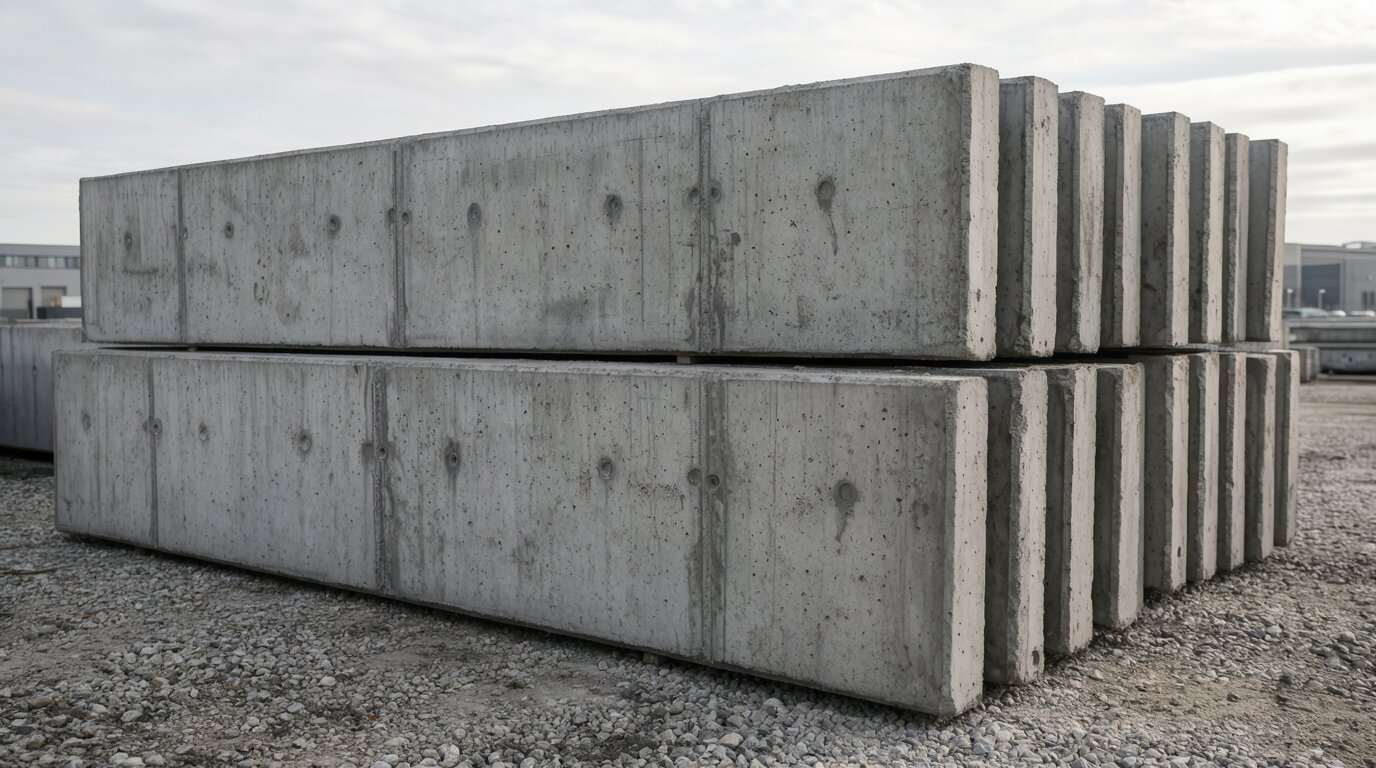
Precast concrete is made in a reusable mold, cured in a controlled plant environment, and delivered to the jobsite as a finished structural component. Instead of handling every step in the field, contractors can use pieces that are already built to specification and ready for installation. This helps reduce weather-related delays, improve quality control, and keep projects moving with more predictable results.
For Heldenfels Enterprises, this is not just a generic construction method. We manufacture and install precast and prestressed components for highway and bridge construction, marine and industrial projects, sports, entertainment, and building construction markets across Texas. That makes this approach especially relevant for contractors, engineers, and owners who need durable structures delivered with fewer jobsite surprises.
How the Process Works
The basic process is straightforward, but the quality comes from the details. A finished component may look simple once it arrives on a truck, but a lot has to happen before that point.
Design and Engineering
Each component is designed around its final use, required loads, dimensions, connection details, transportation limits, and lifting requirements. For bridge and transportation work, this planning is critical because components often need to meet strict project specifications, installation sequences, and long-term performance requirements.
Form Preparation
Crews prepare reusable forms or molds so the finished piece matches the approved drawings and project specifications. Good form preparation affects dimensions, surface quality, and consistency across repeated pieces.
Reinforcement or Prestressing
Steel reinforcement, prestressing strands, embeds, and lifting hardware are placed before concrete is poured. Prestressing is especially important for structural products such as precast prestressed bridge girders and pile systems that need to handle heavy loads.
For prestressed members, steel strands are tensioned before casting. After the concrete reaches the required strength, that tension is released, placing the member into compression. This is one reason prestressed components are so useful for long-span bridge girders, piles, beams, and other structural members.
Casting, Curing, and Installation
The concrete is poured and cured in a plant environment where production teams can better control mix consistency, temperature, curing conditions, and inspections. Once the piece reaches the required strength, it is transported to the jobsite and lifted into place.
This approach aligns with the Federal Highway Administration’s discussion of prefabricated bridge elements and systems, which are built off-site or near-site to reduce on-site construction time and mobility impacts. Transportation and erection still require planning. Components must be sized for hauling routes, cranes, site access, staging, and safe lifting.
Why it Matters on Real Projects
The biggest advantage is predictability. On large infrastructure and commercial projects, predictability is not a luxury; it is what keeps schedules, budgets, lane closures, crane time, and field crews from falling apart.
- Reduce on-site forming and curing time
- Improve quality control through plant production
- Shorten certain installation sequences
- Limit disruption in high-traffic or hard-to-access areas
- Improve consistency across repeated structural components
- Support durable performance in demanding environments
- Reduce the amount of fieldwork exposed to bad weather
In our opinion, the underrated benefit is not just speed. It is control. A jobsite is messy by nature, while a plant environment gives the project team a better shot at repeatable quality before the component ever reaches the field.
The weak version of this argument is “precast is faster.” That is only part of it. The stronger point is that precast concrete shifts critical work into a controlled setting, which can reduce uncertainty before the field crew starts installing major structural elements.
Precast vs. Cast-in-Place Concrete
Both methods have a place. The weak argument would be to pretend one is always better. The smarter approach is to match the method to the job.
| Factor | Precast Concrete | Cast-in-Place Concrete |
|---|---|---|
| Production location | Made in a plant, then shipped to the site | Poured and cured directly on the jobsite |
| Quality control | More controlled production conditions | More dependent on field conditions |
| Schedule impact | Can reduce on-site construction time | Often requires more field forming and curing time |
| Flexibility | Best for planned, repeatable, transportable components | Useful for irregular field conditions or custom pours |
| Common uses | Girders, piles, panels, caps, beams, stairs, stadium components | Slabs, foundations, walls, and site-specific structural pours |
The right choice depends on design, access, cost, schedule, transportation, and installation requirements. Cast-in-place work can be the right answer when the project needs field flexibility or when transportation would be impractical. But when components are repeatable, engineered in advance, and suitable for shipping, precast concrete can give the project team a stronger grip on quality and schedule.
Common Applications of Precast Concrete
Precast systems are used across many construction markets, but for Heldenfels, the most relevant applications are heavy civil, infrastructure, marine, industrial, and large commercial work.
Highway and Bridge Projects
We manufacture precast prestressed bridge girders for highway, railway, pedestrian bridge, overpass, interchange, and water-crossing applications. These components are built to meet demanding structural requirements and are especially useful where reduced field time and reliable quality matter.
For transportation infrastructure, we also produce precast prestressed box beams for bridge and roadway projects where strength, efficient installation, and reduced beam depth can be important design considerations.
Bridge work is a strong fit because project teams often need dependable components, limited closure windows, and precise coordination between fabrication, hauling, and crane placement. In that setting, precast concrete can be central to keeping the project moving.
Deep Foundations and Pile Systems
Prestressed concrete piles are used in bridges, buildings, marine structures, retaining walls, industrial facilities, and other deep foundation applications. We list square pile sizes from 14 inches to 30 inches, giving engineers and contractors practical options for demanding foundation work.
For a deeper look at why these systems are used in challenging foundation conditions, we also explain the benefits of prestressed piles for strength, durability, and long-term performance.
Piles have to do hard work in places where mistakes are expensive. Soil conditions, water exposure, load requirements, and installation demands all matter. A controlled manufacturing process helps produce foundation components that are consistent before they are driven or installed.
Marine, Industrial, and Building Projects
Marine and industrial environments are tough on materials. Salt exposure, heavy loads, moisture, vibration, and long-term service demands make durability a serious requirement. Properly designed precast components can support these projects with strength, consistency, and long service life.
Our marine and industrial capabilities include precast and prestressed components for piling, deck slabs, caps, sheet piles, docks, piers, wharfs, ramps, erosion protection, pipe racks, and related structures.
Large venues and building projects often rely on repeated structural elements. Seating risers, beams, wall panels, stairs, and other components can benefit from plant-controlled production and faster field assembly.
Key Benefits for Contractors and Owners
Before choosing a construction method, contractors and owners need to look beyond material cost alone. The real value of precast concrete comes from how it can improve quality, scheduling, safety, and long-term performance across the entire project.
| Benefit | Why It Matters |
|---|---|
| Better quality control | Components are produced under more controlled plant conditions |
| Faster field installation | Less on-site forming, pouring, and curing can reduce schedule pressure |
| Durability | Components can be engineered for heavy loads, exposure, and long service life |
| Safer sequencing | Less field fabrication can reduce work in traffic, marine, or constrained areas |
| Repeatability | Repeated components can be produced with consistent dimensions and details |
| Lower disruption | Useful for bridges, roads, and public infrastructure where closures are costly |
The real value is not any single benefit. It is the combination. When quality, schedule, access, and durability all matter at once, precast concrete becomes a serious option instead of just another material choice.
Is Precast Concrete Sustainable?
This method can support more sustainable construction when it is designed, manufactured, transported, and installed responsibly. Plant production can reduce material waste, improve batching control, and produce durable components that require less maintenance over time. The Precast/Prestressed Concrete Institute also notes that precast concrete can support sustainable design through durability, efficiency, and long-term building performance.
That said, sustainability claims should be handled honestly. Concrete still has embodied carbon, and transportation distance matters. The stronger argument is not that this method is automatically “green.” The better argument is that durable components, efficient production, reduced jobsite disruption, and long service life can improve the lifecycle performance of a project.
Why Choose Heldenfels Enterprises?
We bring more than a century of Texas construction experience to modern precast and prestressed concrete work. From San Marcos and Corpus Christi, we serve highway, marine, industrial, sports, entertainment, and building construction markets. That experience matters because structural components must be engineered, manufactured, transported, installed, and trusted to perform for decades.
- Bridge girders and transportation components
- Prestressed concrete piles
- Marine and industrial structural elements
- Building and stadium components
- Custom precast and prestressed solutions
For contractors and owners, we offer the practical experience needed to deliver structural systems that perform in real Texas conditions. The hardest parts of precast work happen before the component reaches the site, including engineering coordination, production quality, transportation planning, and erection sequencing. That is why choosing an experienced producer can make the difference between a smooth project and an expensive mess.
Precast Concrete: The Smart Choice for Modern Texas Construction
Precast concrete is more than concrete made off-site; its real value comes from controlled production, consistent quality, durable engineering, and faster field installation. For Texas infrastructure and large commercial projects, those benefits directly affect lane closures, crane schedules, field labor, safety planning, long-term maintenance, and overall project risk. That is why this method is often a practical choice when a project needs strength, speed, and reliability.
Heldenfels Enterprises is a strong fit for this kind of work because our experience lines up with the projects where this method makes the most sense: highway and bridge construction, marine work, industrial facilities, sports and entertainment venues, and building construction. When a project needs structural components built with precision and installed with confidence, this method deserves serious consideration.
Need Precast or Prestressed Concrete Components?
Talk with Heldenfels Enterprises about structural solutions for highway, bridge, marine, industrial, sports, entertainment, and building construction projects.
Contact us nowFrequently Asked Questions About Precast Concrete
What is precast concrete?
Precast concrete is concrete that is cast and cured away from the jobsite, then transported and installed as a finished component.
How durable is precast concrete?
It can be highly durable when properly designed, manufactured, transported, and installed. It is commonly used in bridges, marine structures, industrial facilities, and foundations because it can be engineered for heavy loads and harsh exposure.
Is precast concrete cost-effective?
It can be cost-effective when faster installation, reduced field labor, consistent quality, and lower long-term maintenance help offset fabrication and transportation costs. The answer depends on the project, but the method often becomes more attractive when schedule, repetition, or site disruption are major concerns.
Can precast concrete be customized?
Yes. Components can be customized by shape, reinforcement, prestressing, finish, connection details, lifting hardware, and performance requirements.
What are the most common applications?
Common applications include bridge girders, piles, caps, deck slabs, wall panels, beams, columns, stairs, seating risers, marine structures, industrial foundations, and transportation infrastructure.