
Precast Concrete Steps: A Smart Design and Safety Guide
How proper geometry, slip-resistant finishes, and code-driven railing details turn a factory-cast unit into an entrance people can trust for decades.
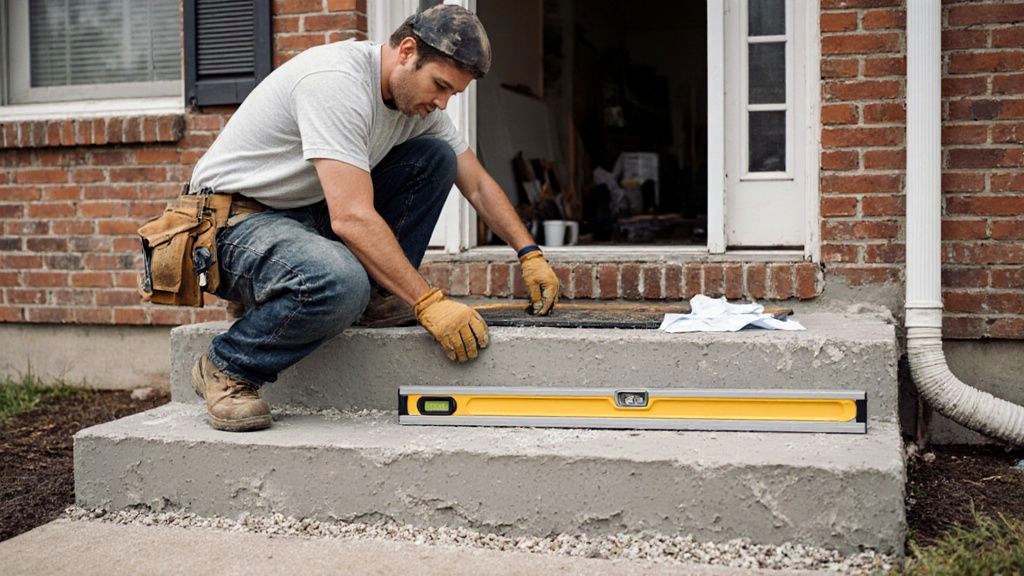
Precast concrete steps solve a problem that trips up more entrance projects than most contractors will admit: how to deliver a strong, level, code-compliant stair without gambling on weather, formwork, and a long cure in the field. The familiar online debate over poured versus precast stairs almost always centers on cost and convenience, and it skips the part that actually decides whether an entrance is safe a decade later. The harder truth is that most stair problems are design problems, not material problems. A factory-cast unit removes the field variables, but it still has to be engineered correctly before it ever leaves the plant. This guide walks through the design decisions and the safety details that separate a stair people trust from one they quietly learn to avoid.
Poured Versus Precast: Why Design Decides the Outcome
Cast-in-place stairs are built where they will live, which sounds like an advantage until you account for everything that can drift on a job site: form alignment, mix consistency, ambient temperature, finishing time, and the curing window before anyone can walk on them. Every one of those variables is a chance to introduce an uneven riser or a low spot that holds water. Precast concrete steps are poured and consolidated in a controlled plant, cured to design strength, and delivered ready to set, so the geometry you approve on a drawing is the geometry you get on site.
That repeatability is exactly why the design phase matters so much. With a poured set, a crew can fudge a dimension in the field to hide a layout error. With precast, the unit arrives finished, so the riser heights, tread depths, landing size, and railing provisions all have to be right on paper first. Get the drawing right and you inherit factory tolerances. Get it wrong and you have shipped the mistake. If you want a deeper look at how that consistency pays off over the life of a building, our breakdown of the long-term value precast steps deliver covers the durability and lifecycle math.
This is also why a quality supplier treats stairs as engineered components rather than commodities. Heldenfels has been casting structural and architectural precast concrete staircases in Texas since 1909, and the projects that go smoothly are almost always the ones where design questions got answered before pour day instead of during the lift.
Designing Precast Concrete Steps for Code and Safety
Safe stairs are not an accident of good workmanship. They are the predictable result of geometry that respects how people actually move their feet. The numbers below are where design and safety meet, and they are the first thing an inspector checks.
Risers, Treads, and Nosings
The single most important safety dimension on any stair is riser consistency. Our feet learn the rhythm of a flight within the first two steps, so a riser that varies more than a fraction of an inch from its neighbors creates a trip hazard precisely because the climber is no longer looking down. The International Code Council model codes cap residential riser height at 7.75 inches with a minimum 10-inch tread depth, and they limit the variation between the largest and smallest riser in a flight to 3/8 inch. Precast lets you hit that tolerance because the form is machined and reused, not rebuilt by hand for every job.
Nosing design matters just as much as the rise and run. A modest rounded or beveled nosing of roughly half an inch gives toes clearance on the way up and a defined edge on the way down, while a sharp square nose chips under traffic and a deep overhang catches heels. The best units cast the nosing profile directly into the form so it is part of the structure, not a fragile add-on.
Landing Size and Door Clearance
A top landing should be at least as deep as the door is wide, and never so shallow that a person has to stand on the top step while pulling a storm door toward them. Design the landing to sit roughly an inch below the threshold so water sheds away from the building rather than pooling at the sill. These are small dimensions on a drawing and large dimensions in real life, because the landing is where people pause, set down groceries, and lose their footing if the geometry fights them.
Slip Resistance, Drainage, and Surface Finish
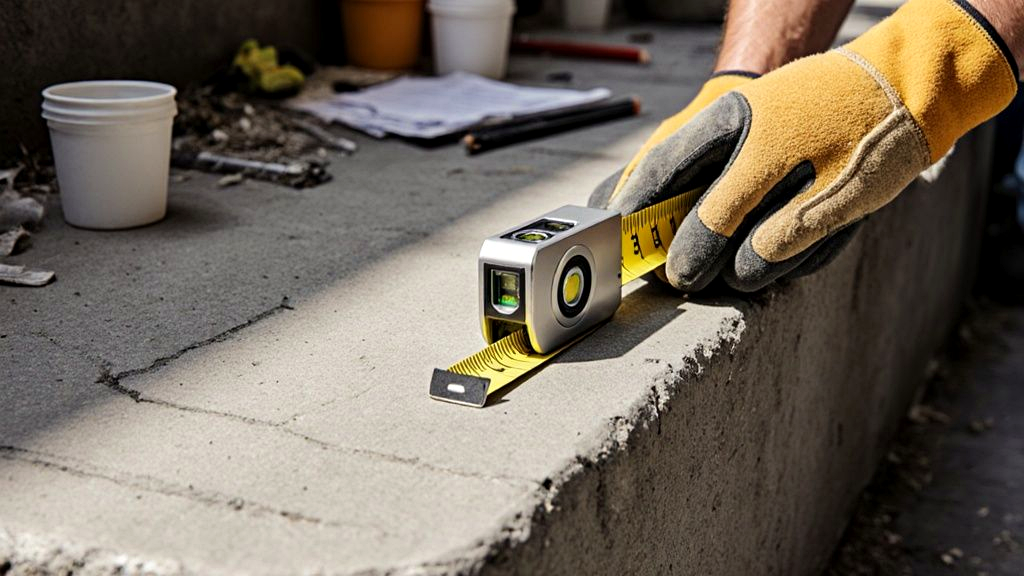
A stair can have flawless geometry and still be dangerous if the walking surface turns slick in the rain. Slip resistance is designed in at the finishing stage, and it is one of the clearest advantages of working with a plant rather than a field crew rushing to beat a thunderstorm. A consistent medium broom finish, drawn perpendicular to the direction of travel, gives a tread the micro-texture a shoe needs without becoming a surface that scuffs knees when someone falls on it.
Drainage is the other half of the equation. Every tread should pitch forward about a quarter inch over its depth so water runs off instead of standing and freezing. Standing water is what turns a winter morning into a fall, and it is also what drives the freeze-thaw scaling that destroys a tread surface over a few seasons. Because the slope is cast into precast concrete steps at the plant, it is uniform across the whole flight rather than guessed at with a screed.

For high-traffic or wet-environment entrances, abrasive grit can be broadcast into the nosing zone or cast-in detectable warning patterns can be specified for transit and accessibility applications. The point is that the finish is a deliberate design choice tied to how and where the stair will be used, not an afterthought troweled on at the end.
Safety note: Falls on stairs send hundreds of thousands of people to emergency rooms every year, and the CDC identifies uneven surfaces and poor traction among the leading contributors. Slip-resistant finish and consistent risers are not premium upgrades; they are the baseline of a stair that does its job.
Railings, Lighting, and Accessible Access
Geometry and finish get a person up the stair safely in daylight. Handrails, lighting, and accessible routes keep them safe at night, in the rain, and across the full range of who uses the entrance. Most model codes require a graspable handrail on any flight of four or more risers, mounted between 34 and 38 inches above the nosing line, with a diameter a hand can actually close around. The smart move when ordering precast concrete steps is to tell the plant where rails will land so post sleeves or cores are cast into the unit, giving you a clean, structurally sound anchor instead of a drilled-in bracket that loosens over time.
Accessibility deserves the same forethought. Where an entrance must serve everyone, the ADA standards shape tread depth, handrail extensions, and the need for a companion ramp, and those requirements are far cheaper to design in than to retrofit. Lighting belongs in the same conversation: a single fixture that washes the tread faces, rather than glaring into climbers’ eyes, makes every other safety feature visible after dark. When you are scoping a project, our team can walk you through how cast-in rail provisions and finishes are handled on our precast concrete stairs so the safety details are part of the unit, not bolted on later.
Common Design and Safety Mistakes to Avoid
Most stair complaints, whether they show up in an inspection report or a frustrated homeowner forum post, trace back to a handful of design oversights. None of them are expensive to prevent on a drawing, and all of them are costly to fix once the unit is set.
| Design Mistake | Why It Is Dangerous | The Fix |
|---|---|---|
| Inconsistent riser heights | Breaks the climber’s rhythm and causes trips, especially on descent | Specify factory tolerance and hold variation within 3/8 inch across the flight |
| Flat, non-draining treads | Water stands, freezes, and creates ice plus long-term scaling | Cast a 1/4-inch-per-tread forward pitch into the unit at the plant |
| Slick, over-troweled finish | Smooth surface loses traction the moment it gets wet | Specify a medium broom finish drawn across the direction of travel |
| Afterthought handrails | Drilled-in posts loosen and fail at the worst moment | Cast post sleeves or cores into the design before fabrication |
| Undersized top landing | Forces people to balance on the top step while opening a door | Size the landing at least as deep as the door is wide |
The pattern is consistent: every one of these failures is a decision that should have been made before the unit was cast. That is the quiet superpower of precast. The design review is your one chance to get safety right, and once it is right the factory reproduces it perfectly every time.
From Drawing to Durable Entrance
Precast remains one of the most reliable and durable ways to deliver a finished entrance, but the material does not make a stair safe on its own. Safe stairs come from disciplined design: consistent risers, generous treads, properly profiled nosings, slip-resistant finishes, drainage that sheds water, and railings and lighting planned before the pour. Respect those fundamentals and a precast unit will outperform a site-cast set on schedule, finish quality, and long-term safety. Skip them and even the strongest concrete will eventually tell on a sloppy design.
The best entrances look effortless because the thinking happened early. Once the design is sound, the rest is just a clean lift and a careful set. If you want to see how the planning and field work come together, our professional installation walkthrough picks up where this design guide leaves off.
Planning a Safer Entrance?
Heldenfels Enterprises has engineered and cast precast stairs across Texas since 1909. Talk to our team about geometry, finishes, railing provisions, and code-ready shop drawings for your next project.
Explore Our Precast Stair Systems